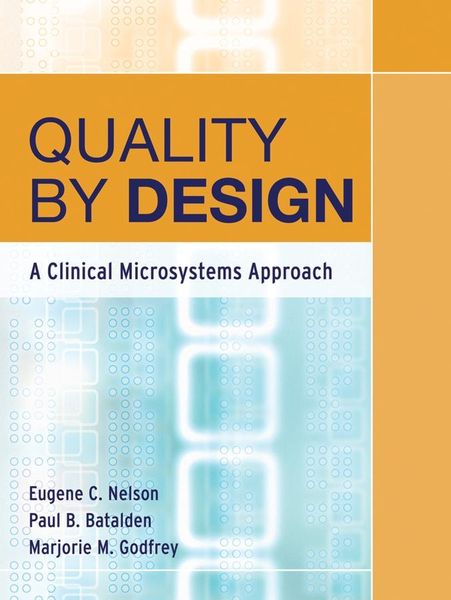
Produktbild: Quality by Design

Quality by Design A Clinical Microsystems Approach

111,99 €

inkl. gesetzl. MwSt., Versandkostenfrei

Lieferung nach Hause

Beschreibung

Produktdetails

Einband

Taschenbuch

Erscheinungsdatum

16.03.2007

Herausgeber

Eugene C Nelson + weitere

Verlag

John Wiley & Sons

Seitenzahl

512

Maße (L/B/H)

23,5/17,9/2,7 cm

Gewicht

804 g

Auflage

1. Auflage

Sprache

Englisch

ISBN

978-0-7879-7898-3

Beschreibung

Produktdetails

Einband

Taschenbuch

Erscheinungsdatum

16.03.2007

Herausgeber

Verlag

John Wiley & Sons

Seitenzahl

512

Maße (L/B/H)

23,5/17,9/2,7 cm

Gewicht

804 g

Auflage

1. Auflage

Sprache

Englisch

ISBN

978-0-7879-7898-3

Kundinnen und Kunden meinen

0 Bewertungen

Informationen zu Bewertungen

Zur Abgabe einer Bewertung ist eine Anmeldung im Konto notwendig. Die Authentizität der Bewertungen wird von uns nicht überprüft. Wir behalten uns vor, Bewertungstexte, die unseren Richtlinien widersprechen, entsprechend zu kürzen oder zu löschen.

Die Bewertungen sind nach Format, Anzahl Sterne und Datum sortiert.

Verfassen Sie die erste Bewertung zu diesem Artikel

Helfen Sie anderen Kund*innen durch Ihre Meinung

Kundinnen und Kunden meinen

0 Bewertungen filtern

Die Leseprobe wird geladen.
  • Produktbild: Quality by Design
  • Tables, Figures, and Exhibits xiii

    Foreword xix
    Donald M. Berwick

    Preface xxiii

    Acknowledgments xxvii

    Introduction xxxi

    The Editors xxxix

    The Contributors xliii

    Part One: Cases And Principles 1

    1 Success Characteristics of High-Performing Microsystems: Learning from the Best 3
    Eugene C. Nelson, Paul B. Batalden, Thomas P. Huber, Julie K. Johnson, Marjorie M. Godfrey, Linda A. Headrick, John H. Wasson

    True Structure of the System, Embedded Systems, and Need to Transform Frontline Systems

    The Bladyka Case

    Research Design

    Results

    Practical Implications

    Conclusion

    2 Developing High-Performing Microsystems 34
    Eugene C. Nelson, Paul B. Batalden, William H. Edwards, Marjorie M. Godfrey, Julie K. Johnson

    Case Study: A Decade of Progress for an Intensive Care Nursery

    A Model of Development and a Curriculum to Catalyze Microsystem Growth

    Conclusion

    3 Leading Microsystems 51
    Paul B. Batalden, Eugene C. Nelson, Julie K. Johnson, Marjorie M. Godfrey, Thomas P. Huber, Linda Kosnik, Kerri Ashling

    Leader, Leadership, Leading

    Recap of Methods

    Three Fundamental Processes of Leading: What Clinical Microsystem Team Members Observe and Report

    Discussion

    Conclusion

    4 Leading Macrosystems and Mesosystems for Microsystem Peak Performance 69
    Paul B. Batalden, Eugene C. Nelson, Paul B. Gardent, Marjorie M. Godfrey

    Case Study: A True Story, with Names Changed to Protect the Innocent

    Leadership Frameworks: Some of the Best Approaches

    Leading Large Health Systems to Peak Performance Using Microsystem Thinking

    Conclusion

    5 Developing Professionals and Improving Worklife 106
    Thomas P. Huber, Marjorie M. Godfrey, Eugene C. Nelson, Julie K. Johnson, Christine Campbell, Paul B. Batalden

    Case Study: Staff Development at Massachusetts General Hospital Downtown Associates

    Conclusion

    6 Planning Patient-Centered Services 124
    Marjorie M. Godfrey, Eugene C. Nelson, John H. Wasson, Julie K. Johnson, Paul B. Batalden

    Planning Patient-Centered Services and the 5 P's

    Case Study: Planning Services for Subpopulations of Patients to Best Provide Care for Individual Patients

    A Developmental Journey: Beginning to Assess, Understand, and Improve a Clinical Microsystem

    Analysis and Improvement of Processes

    A Huddle in Plastic Surgery

    Conclusion

    7 Planning Patient-Centered Care 148
    John H. Wasson, Marjorie M. Godfrey, Eugene C. Nelson, Julie K. Johnson, Paul B. Batalden

    Planning Care Well: Exemplary Clinical Microsystems

    Planning Care in Any Microsystem

    A Low-Tech Example for Ambulatory Services: CARE Vital Signs

    Conclusion

    8 Improving Patient Safety 165
    Julie K. Johnson, Paul Barach, Joseph P. Cravero, George T. Blike, Marjorie M. Godfrey, Paul B. Batalden, Eugene C. Nelson

    Microsystem Patient Safety Scenario

    Case Study: Dartmouth-Hitchcock PainFree Program

    Conclusion

    9 Creating a Rich Information Environment 178
    Eugene C. Nelson, Paul B. Batalden, Karen Homa, Marjorie M. Godfrey, Christine Campbell, Linda A. Headrick, Thomas P. Huber, Julie K. Johnson, John H. Wasson

    Case Study 1: Specialty Care: Dartmouth-Hitchcock Spine Center

    Case Study 2: Overlook Hospital Emergency Department

    Case Study 3: Intermountain Health Care Shock Trauma Intensive Care Unit

    Tips and Principles to Foster a Rich Information Environment

    Discussion

    Conclusion

    Part Two: Activating the Organization And the Dartmouth Microsystem Improvement Curriculum 197

    10 Overview of path forward And Introduction to part two 199

    Recap of Part One and Overview of Part Two

    Using Real Case Studies and Practical Applications of Microsystem Thinking, Methods, and Tools

    Working at All Levels of a Health System

    Focusing on the Microsystem Level

    Review Questions

    Prework

    11 Introduction to Microsystem Thinking 230

    What Is a System in Health Care?

    How Did Clinical Microsystem Knowledge Evolve?

    What Is a Clinical Microsystem?

    Where Do Clinical Microsystems Fit in the Health Care Delivery System?

    What Does a Clinical Microsystem Look Like?

    Why Focus on the Clinical Microsystem?

    How Do Clinical Microsystems Link to Crossing the Quality Chasm?

    What Were the Findings of the Dartmouth Clinical Microsystem Research?

    What Does a Microsystem's Developmental Journey Look Like?

    Conclusion

    Case Studies

    Review Questions

    Between Sessions Work

    12 Effective Meeting Skills I 243

    What Is a Productive and Effective Meeting?

    Why Use Meeting Skills and Roles?

    What Are Effective Meeting Roles?

    What Are the Phases of an Effective Meeting?

    What Processes Are Evident in an Effective Meeting?

    What Is the Seven-Step Meeting Process?

    What Does a Meeting Agenda Template Look Like?

    What Are the Ground Rules for Meetings?

    What Are Some Tips for Getting Started with Productive Meetings?

    How Do You Keep a Rhythm of Improvement?

    Case Studies

    Review Questions

    Between Sessions Work

    13 Assessing Your Microsystem with the 5 P's 258

    How Does an Interdisciplinary Lead Improvement Team Begin to Assess and Improve a Clinical Microsystem?

    What Does the 5 P's Framework Look Like?

    What Resources Are Available to Guide the 5 P's Assessment?

    What Is a Helpful Way to Introduce Your Team to the Assessment Process?

    What Are the 5 P's?

    What Should You Do with the Assessment Findings?

    Case Studies

    Review Questions

    Between Sessions Work

    14 The Model for Improvement: PDSA ¿ SDSA 271

    What Is the Model for Improvement?

    Why Use the Model for Improvement?

    How Does the Model Fit into the Improvement Process?

    What Is the PDSA Part of the Model?

    What Are the Benefits of Using PDSA?

    What Is Involved in Each of the Four Steps of Plan, Do, Study, and Act?

    What Is the SDSA Cycle?

    What Is Involved in Each of the Four Steps of Standardize, Do, Study, and Act?

    What Tools Can Assist Your PDSA Cycle ¿ SDSA Implementation?

    What Are Some Tips for Using the PDSA ¿ SDSA Method?

    Case Studies

    Review Questions

    Between Sessions Work

    15 Selecting Themes for Improvement 284

    What Is a Theme for Improvement?

    Why Use a Theme?

    What Are the Theme Selection Considerations?

    What Process Can You Use to Generate Theme Ideas and Select a First Theme?

    What Are the Next Steps?

    Case Studies

    Review Questions

    Between Sessions Work

    16 Improvement Global Aim 291

    What Is a Global Aim?

    Why Use a Global Aim?

    How Do You Write a Global Aim?

    What Are the Next Steps?

    Case Studies

    Review Questions

    Between Sessions Work

    17 Process Mapping 296

    What Is Process Mapping?

    Why Use Process Mapping?

    What Are the Commonly Used Flowchart Symbols?

    What Does a High-Level Flowchart Look Like?

    What Does a Detailed Flowchart Look Like?

    What Are Some Tips for Creating a Flowchart?

    What Does a Deployment Flowchart Look Like?

    What Are Some Tips for Creating a Deployment Flowchart?

    Case Studies

    Review Questions

    Between Sessions Work

    18 Specific Aim 308

    What Is a Specific Aim?

    Why Use a Specific Aim?

    Where Do Specific Aims Come From?

    Where Does the Specific Aim Fit in the Overall Improvement Process?

    How Do You Write a Specific Aim?

    What Are the Next Steps?

    Case Studies

    Review Questions

    Between Sessions Work

    19 Cause and Effect Diagrams 313

    What Is a Cause and Effect Diagram?

    Why Use a Fishbone Diagram?

    What Is the Structure of a Fishbone Diagram?

    What Does a Completed Fishbone Look Like?

    What Are Some Tips for Creating a Fishbone Diagram?

    Case Studies

    Review Questions

    Between Sessions Work

    20 Effective Meeting Skills II: Brainstorming and Multi-Voting 321

    What Is Brainstorming?

    What Are the Benefits of Brainstorming?

    What Are Some Different Types of Brainstorming?

    What Are Some Tips for Conducting Brainstorming?

    What Is Multi-Voting?

    Do Teams Always Multi-Vote After a Brainstorming Session?

    How Do You Multi-Vote?

    What Does a Brainstorming Session with a Multi-Voting Outcome Look Like?

    Case Studies

    Review Questions

    Between Sessions Work

    21 Change Concepts 331

    What Is a Change Concept?

    Why Use Change Concepts?

    How Can You Use Change Concepts in a Process?

    What Are the Next Steps?

    Case Studies

    Review Questions

    Between Sessions Work

    22 Measurement and Monitoring 339

    What Are Measures, What Makes Measures Good, and How Do They Relate to Aims?

    What Is a Run Chart?

    What Are the Benefits of Using a Run Chart?

    How Do Run Charts Fit in the Overall Improvement Process?

    What Do Run Charts Tell You About Your Performance Level and Variation?

    What Are Special Cause and Common Cause Variation?

    How Do You Make a Run Chart?

    How Do You Interpret Run Chart Results?

    What Is a Control Chart?

    What Is the Theory Behind Control Charts?

    What Are the Benefits of Using a Control Chart Instead of a Run Chart?

    What Are the Different Kinds of Control Charts?

    What Is an XmR Control Chart?

    How Do You Interpret Control Chart Results?

    When Do You Recalculate Control Chart Values?

    What Are Some Tips for Using Run Charts and Control Charts?

    Case Studies

    Review Questions

    Between Sessions Work

    23 Action Plans and Gantt Charts 362

    What Is an Action Plan?

    What Is a Gantt Chart?

    Why Use Action Plans and Gantt Charts?

    How Do You Write an Action Plan?

    How Do You Create a Gantt Chart?

    What Are the Next Steps?

    Case Studies

    Review Questions

    Between Sessions Work

    24 Follow Through on Improvement: Storyboards, Data Walls, and Playbooks 369

    What Is the Importance of Follow Through?

    What Can You Do to Follow Through?

    What Are the Fundamentals of Improvement?

    What Is a Data Wall?

    What Is a Playbook?

    How Is the Playbook Used?

    How Do You Create a Playbook?

    How Do You Maintain Your Playbook?

    What Is a Storyboard?

    How Do You Make a Storyboard?

    Discussion

    Case Studies

    Review Questions

    Between Sessions Work

    25 Conclusion: Continuing on the Path to Excellence 380

    Looking Back

    Looking Forward and an Invitation: Make It Personal and Make It Happen

    Appendix A: Primary Care Workbook 385

    Name Index 433

    Subject Index 437