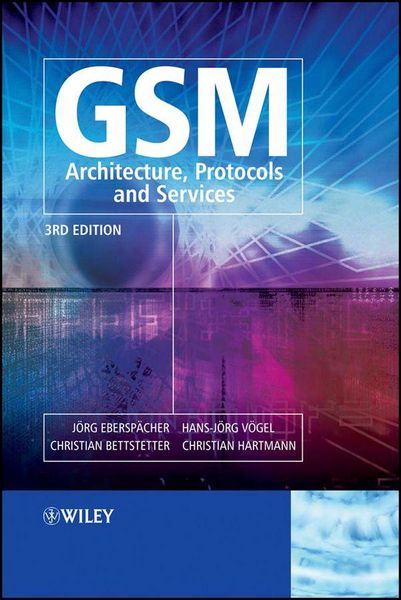
GSM - Architecture, Protocols and Services Architecture, Protocols and Services
178,99 €
inkl. gesetzl. MwSt.,
Lieferung nach Hause
Beschreibung
Produktdetails
Einband
Gebundene Ausgabe
Erscheinungsdatum
01.03.2009
Verlag
John Wiley & SonsSeitenzahl
326
Maße (L/B/H)
25,1/17,6/2,5 cm
Gewicht
718 g
Auflage
3. Auflage
Sprache
Englisch
ISBN
978-0-470-03070-7
Der Telekommunikationsstandard GSM - benannt nach der Arbeitsgruppe "Groupe Spéciale Mobile", die seine Einführung vorantrieb - ist mittlerweile in über 200 Ländern bzw. Territorien verfügbar und damit der einzige wirklich globale Standard im Bereich mobiler Kommunikation. Kein Zufall also, dass der vorliegende Band bereits in die dritte Auflage geht. Er versteht sich einerseits als gründliche Einführung in GSM, bietet andererseits aber auch einen Überblick über aktuelle Entwicklungen und Zukunftstrends. Gegenüber der Vorauflage hat sich einiges geändert - was nicht zuletzt die Änderung im Titel reflektiert. Er enthält nun "Architecture" statt "Switching" und folgt damit der Akzentverschiebung des Bandes in Richtung des Themas GSM-Netzwerkarchitektur. Für die Neuauflage wurden zudem zahlreiche Abschnitte erweitert und überarbeitet, etwa die zu HSCSD (High-Speed Circuit Switched Data) und EDGE (Enhanced Data Rates for GSM Evolution) sowie zu MMS und anderen Diensten (Voicebox etc.). Die Stärke des Buches liegt nicht zuletzt darin, dass es sich im Unterscheid zu einem Großteil der Konkurrenz nicht auf einzelne Themen wie GPRS oder EDGE konzentriert, sondern über diese Aspekte hinaus GSM insgesamt in den Blick nimmt.
Kundinnen und Kunden meinen
Verfassen Sie die erste Bewertung zu diesem Artikel
Helfen Sie anderen Kund*innen durch Ihre Meinung
Kurze Frage zu unserer Seite
Vielen Dank für dein Feedback
Wir nutzen dein Feedback, um unsere Produktseiten zu verbessern. Bitte habe Verständnis, dass wir dir keine Rückmeldung geben können. Falls du Kontakt mit uns aufnehmen möchtest, kannst du dich aber gerne an unseren Kund*innenservice wenden.
zum Kundenservice