• Produktbild: Ideas Pertaining to a Pure Phenomenology and to a Phenomenological Philosophy
  • Produktbild: Ideas Pertaining to a Pure Phenomenology and to a Phenomenological Philosophy
Band 2 - 13%

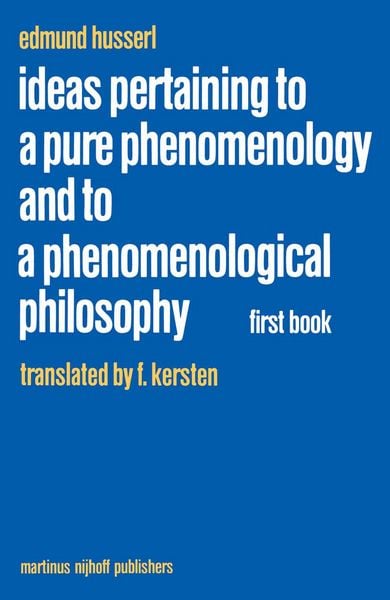
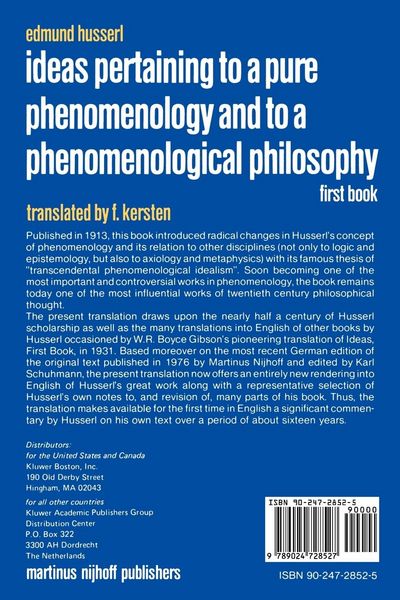
Ideas Pertaining to a Pure Phenomenology and to a Phenomenological Philosophy First Book: General Introduction to a Pure Phenomenology

13% sparen

305,99 € UVP 353,09 €

inkl. gesetzl. MwSt., Versandkostenfrei

Lieferung nach Hause

Beschreibung

Produktdetails

Einband

Taschenbuch

Erscheinungsdatum

30.09.1983

Verlag

Springer Netherland

Seitenzahl

401

Maße (L/B/H)

24/16/2,4 cm

Gewicht

662 g

Auflage

Softcover reprint of the original 1st ed. 1982

Übersetzt von

F. Kersten

Sprache

Englisch

ISBN

978-90-247-2852-7

Beschreibung

Produktdetails

Einband

Taschenbuch

Erscheinungsdatum

30.09.1983

Verlag

Springer Netherland

Seitenzahl

401

Maße (L/B/H)

24/16/2,4 cm

Gewicht

662 g

Auflage

Softcover reprint of the original 1st ed. 1982

Übersetzt von

F. Kersten

Sprache

Englisch

ISBN

978-90-247-2852-7

Herstelleradresse

Springer-Verlag KG
Sachsenplatz 4-6
1201 Wien
AT

Email: GPSR Kontakt

Noch keine Bewertungen vorhanden

Verfassen Sie die erste Bewertung zu diesem Artikel

Helfen Sie anderen Kundinnen und Kunden durch Ihre Meinung.

Kundinnen und Kunden meinen

Bewertungen (0)

  • Produktbild: Ideas Pertaining to a Pure Phenomenology and to a Phenomenological Philosophy
  • Produktbild: Ideas Pertaining to a Pure Phenomenology and to a Phenomenological Philosophy
  • One Essence and Eidetic Cognition.- One Matter of Fact and Essence.-
    1. Natural Cognition and Experience.-
    2. Matter of Fact. Inseparability of Matter of Fact and Essence.-
    3. Eidetic Seeing and Intuition of Something Individual.-
    4. Eidetic Seeing and Phantasy. Eidetic Cognition Independent of All Cognition of Matters of Fact.-
    5. Judgments About Essences and Judgments Having Eidetic Universal Validity.-
    6. Some Fundamental Concepts. Universality and Necessity.-
    7. Sciences of Matters of Fact and Eidetic Sciences.-
    8. Relationships of Dependence Between Science of Matters of Fact and Eidetic Science.-
    9. Region and Regional Eidetics.-
    10. Region and Category. The Analytic Region and Its Categories.-
    11. Syntactical Objectivities and Ultimate Substrates. Syntactical Categories.-
    12. Genus and Species.-
    13. Generalization and Formalization.-
    14. Substrate-Categories. The Substrate-Essence and the Todi Ti.-
    15. Selfsufficient and Non-selfsufficient Objects. Concretum and Individuum.-
    16. Region and Category in the Materially Filled Sphere. Synthetical Cognitions A Priori.-
    17. Conclusion of Our Logical Considerations.- Two Naturalistic Misinterpretations.-
    18. Introduction to the Critical Discussions.-
    19. The Empiricistic Identification of Experience and the Originarily Presentive Act.-
    20. Empiricism as Skepticism.-
    21. Obscurities on the Idealistic Side.-
    22. The Reproach of Platonic Realism. Essence and Concept.-
    23. The Spontaneity of Ideation. Essence and Fictum.-
    24. The Principle of All Principles.-
    25. In Praxis: The Positivist as Scientific Investigator of Nature. In Reflection: The Scientific Investigator as Positivist.-
    26. Sciences of the Dogmatic and Sciences of the Philosophical Attitude.- Two The Considerations Fundamental to Phenomenology.- One The Positing Which Belongs to the Natural Attitude and Its Exclusion.-
    27. The world of the Natural Attitude: I and My Surrounding World.-
    28. The Cogito. My Natural Surrounding World and the Ideal Surrounding Worlds.-
    29. The “Other” Ego-Subjects and the Intersubjective Natural Surrounding World.-
    30. The General Positing Which Characterizes the Natural Attitude.-
    31. Radical Alteration of the Natural Positing. “Excluding,” “Parenthesizing.”.-
    32. The Phenomenological ?????.- Two Consciousness and Natural Actuality.-
    33. Preliminary Indication of “Pure” or “Transcendental” Consciousness As the Phenomenological Residuum.-
    34. The Essence of Consciousness as Theme.-
    35. The Cogito as “Act.” Non-actionality Modification.-
    36. Intentive Mental Processes. Mental Process Taken Universally.-
    37. The Pure Ego’s “Directedness-to” Within the Cogito and the Heeding Which Seizes Upon.-
    38. Reflections on Acts. Perception of Something Immanent and of Something Transcendent.-
    39. Consciousness and Natural Actuality. The “Naive” Human Being’s Conception.-
    40. “Primary” and “Secondary” Qualities. The Physical Thing Given “In Person” a “Mere Appearance” of the “True Physical Thing” Determined in Physics.-
    41. The Really Inherent Composition of Perception and Its Transcendent Object.-
    42. Being as Consciousness and Being as Reality. Essentially Necessary Difference Between the Modes of Intuition.-
    43. The Clarification of a Fundamental Error.-
    44. Merely Phenomenal Being of Something Transcendent, Absolute Being of Something Immanent.-
    45. Unperceived Mental Processes, Unperceived Reality.-
    46. Indubitability of the Perception of Something Immanent, Dubitability of the Perception of Something Transcendent.- Three The Region of Pure Consciousness.-
    47. The Natural World as a Correlate of Consciousness.-
    48. The Logical Possibility and the Material Countersense of a World Outside Ours.-
    49. Absolute Consciousness as the Residuum After the Annihilation of the World.-
    50. The Phenomenological Attitude; Pure Consciousness as the Field of Phenomenology.-
    51. The Signification of the Transcendental Preliminary Considerations.-
    52. Supplementations. The Physical Thing as Determined by Physics and the “Unknown Cause of Appearance.”.-
    53. Animalia and Psychological Consciousness.-
    54. Continuation. The Transcendent Psychological Mental Process Accidental and Relative; the Transcendental Mental Process Necessary and Absolute.-
    55. Conclusion. All Reality Existent by Virtue of “Sense-bestowal.” Not a “Subjective Idealism.”.- Four The Phenomenological Reductions.-
    56. The Question About the Range of the Phenomenological Reduction. Natural and Cultural Sciences.-
    57. The Question of the Exclusion of the Pure Ego.-
    58. The Transcendency, God, Excluded.-
    59. The Transcendency of the Eidetic. Exclusion of Pure Logic as Mathesis Universalis.-
    60. The Exclusion of Material-Eidetic Disciplines.-
    61. The Methodological Signification of the Systematic Theory of Phenomenological Reductions.-
    62. Epistemological Anticipations. The “Dogmatic” and the Phenomenological Attitude.- Three Methods and Problems of Pure Phenomenology.- One Preliminary Methodic Deliberations.-
    63. The Particular Significance of Methodic Deliberations for Phenomenology.-
    64. The Phenomenologist’s Self-Exclusion.-
    65. The Reflexive Reference of Phenomenology to Itself.-
    66. Faithful Expression of Clear Data. Unambiguous Terms.-
    67. The Method of Clarification, “Nearness of Givenness” and “Remoteness of Givenness.”.-
    68. Genuine and Spurious Degrees of Clarity. The Essence of Normal Clarification.-
    69. The Method of Perfectly Clear Seizing Upon Essences.-
    70. The Role of Perception in the Method of Eidetic Clarification. The Primacy of Free Phantasy.-
    71. The Problem of the Possibility of a Descriptive Eidetics of Mental Processes.-
    72. Eidetic Sciences: Concrete, Abstract, “Mathematical.”.-
    73. Application to the Problem of Phenomenology. Description and Exact Determination.-
    74. Descriptive and Exact Sciences.-
    75. Phenomenology as a Descriptive Eidetic Doctrine of Pure Mental Processes.- Two Universal Structures of Pure Consciousness.-
    76. The Theme of the Following Investigations.-
    77. Reflection as a Fundamental Peculiarity of the Sphere of Mental Processes. Studies in Reflection.-
    78. The Phenomenological Study of Reflections on Mental Processes.-
    79. Critical Excursis. Phenomenology and the Difficulties of “Self-Observation.”.-
    80. The Relationship of Mental Processes to the Pure Ego.-
    81. Phenomenological Time and Consciousness of Time.-
    82. Continuation. The Three-fold Horizon of Mental Processes As At The Same Time the Horizon of Reflection On Mental Processes.-
    83. Seizing Upon the Unitary Stream of Mental Processes as “Idea.”.-
    84. Intentionality as Principal Theme of Phenomenology.-
    85. Sensuous ???, Intentive ?????.-
    86. The Functional Problems.- Three Noesis and Noema.-
    87. Preliminary Remarks.-
    88. Really Inherent and Intentive Components of Mental Processes. The Noema.-
    89. Noematic Statements and Statements About Actuality. The Noema in the Psychological Sphere.-
    90. The “Noematic Sense” and the Distinction Between “Immanental” and “Actual Objects.”.-
    91. Extension to the Widest Sphere of Intentionality.-
    92. The Noetic and Noematic Aspects of Attentional Changes.-
    93. Transition to the Noetic-Noematic Structures of the Higher Spheres of Consciousness.-
    94. Noesis and Noema in the Realm of Judgment.-
    95. The Analogous Distinctions in the Emotional and Volitional Spheres.-
    96. Transition to Further Chapters. Concluding Remarks.- Four The Set of Problems Pertaining to Noetic-Noematic Structures.-
    97. The Hyletic and Noetic Moments as Really Inherent Moments, the Noematic Moments as Really Non-Inherent Moments, of Mental Processes.-
    98. The Mode of Being of the Noema. Theory of Forms of Noeses. Theory of Forms of Noemata.-
    99. The Noematic Core and Its Characteristics in the Sphere of Original Presentations and Presentiations.-
    100. Eidetically Lawful Hierarchical Formations of Objectivations in the Noesis and Noema.-
    101. Characteristics of Levels. Different Sorts of “Reflections.”.-
    102. Transition to New Dimensions of Characterizations.-
    103. Belief-characteristics and Being-characteristics.-
    104. The Doxic Modalities as Modifications.-
    105. Belief-Modality as Belief, Being-Modality as Being.-
    106. Affirmation and Denial Along With Their Noematic Correlations.-
    107 Reiterated Modifications.-
    108. Noematic Characteristics Not Determinations Produced by “Reflection.”.-
    109. The Neutrality Modification.-
    110. Neutralized Consciousness and Legitimation of Reason. Assuming.-
    111. The Neutrality Modification and Phantasy.-
    112. Reiterability of the Phantasy Modification. Non-Reiterability of the Neutrality Modification.-
    113. Actual and Potential Positings.-
    114. Further Concerning the Potentiality of Positing and Neutrality Modification.-
    115. Applications. The Broadened Concept of an Act. Effectings of an Act. Arousals of an Act.-
    116. Transition to New Analyses. The Founded Noeses and Their Noematic Correlates.-
    117. The Founded Positings and the Conclusion of the Doctrine of Neutrality Modifications. The Universal Concept of Positing.-
    118. Syntheses of Consciousness. Syntactical Forms.-
    119. The Transmutation of Polythetical and Monothetical Acts.-
    120. Positionality and Neutrality in the Sphere of Syntheses.-
    121. Doxic Syntaxes in the Emotional and Volitional Spheres.-
    122. Modes of Effectuation of the Articulated Syntheses. “Theme.”.-
    123. Confusion and Distinctness as Modes of Effectuation of Synthetical Acts.-
    124. The Noetic-Noematic Stratum of “Logos.” Signifying and Signification.-
    125. The Modalities of Effectuation in the Logical-Expressive Sphere and the Method of Clarification.-
    126. Completeness and Universality of Expression.-
    127. The Expression of Judgments and the Expression of Emotional Noemas.- Four Reason and Actuality.- One The Noematic Sense and the Relation to the Object.-
    128. Introduction.-
    129. “Content” and “Object;” the Content as “Sense.”.-
    130. Delimitation of the Essence, “Noematic Sense.”.-
    131. The “Object,” the “Determinable X in the Noematic Sense.”.-
    132. The Core As a Sense in the Mode Belonging to its Fullness.-
    133. The Noematic Positum. Posited and Synthetic Posita. Posita in the Realm of Objectivations.-
    134. The Doctine of Apophantic Forms.-
    135. Object and Consciousness. The Transition to the Phenomenology of Reason.- Two Phenomenology of Reason.-
    136. The First Fundamental Form of Rational Consciousness: Originarily Presentive “Seeing.”.-
    137. Evidence and Intellectual Sight. “Ordinary” and “Pure” Evidence, Assertoric and Apodictic Evidence.-
    138. Adequate and Inadequate Evidence.-
    139. The Interweaving of All Kinds of Reason. Theoretical, Axiological and Practical Truth.-
    140. Confirmation. Justification Without Evidence. Equivalence of Positional and Neutral Intellectual Sight.-
    141. Immediate and Mediate Rational Positing. Mediate Evidence.-
    142. Rational Positing and Being.-
    143. Adequate Physical Thing-Givenness as Idea in the Kantian Sense.-
    144. Actuality and Originary Presentive Consciousness: Concluding Determinations.-
    145. Critical Considerations Concerning the Phenomenology of Evidence.- Three The Levels of Universality Pertaining to The Problems of the Theory of Reason.-
    146. The Most Universal Problems.-
    147. Ramifications of the Problem. Formal Logic, Axiology and Theory of Practice.-
    148. Problems of the Theory of Reason Pertaining to Formal Ontology.-
    149. The Problems of the Theory of Reason Pertaining to Regional Ontologies. The Problem of Phenomenological Constitution.-
    150. Continuation. The Region, Physical Thing, As Transcendental Clue.-
    151. The Strata of the Transcendental Constitution of the Physical Thing Supplementations.-
    152. Extension of the Problem of Transcendental Constitution to Other Regions.-
    153. The Full Extension of the Transcendental Problem The Articulation of the Investigations.- Index to Proper Names.- Analytic Subject Index.