KI-Beratung Beta

Gutscheinbedingungen

**Gültig vom 23.11. bis 30.11.2026 | Gültig für nicht preisgebundene fremdsprachige Bücher | Einzelne Artikel können ausgeschlossen sein | Online auf www.bücher.de einlösbar | Click & Collect nur mit Online-Zahlung (Paypal/Kreditkarte) vorab | Nicht kombinierbar mit anderen Gutscheinen oder Preisaktionen | Nur einmal pro Einkauf einlösbar | Gutschein wird auf max. 500€ Bestellwert angerechnet | Keine Barauszahlung | Nicht gültig für Versandkosten und Services

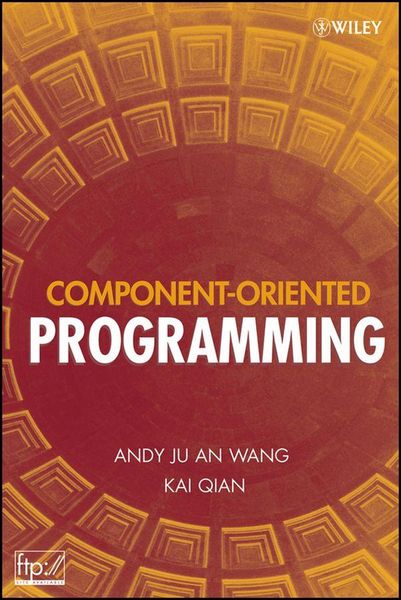
Produktbild: Component-Oriented Programming

Component-Oriented Programming

174,99 €

inkl. gesetzl. MwSt., Versandkostenfrei


Beschreibung

A practical, programming-centered approach to component-based software development

Component-oriented programming (COP) is rapidly becoming a mainstream programming paradigm, offering higher reusability and better modular structure with greater flexibility than object-oriented or library-based programming...

Beschreibung

A practical, programming-centered approach to component-based software development

Component-oriented programming (COP) is rapidly becoming a mainstream programming paradigm, offering higher reusability and better modular structure with greater flexibility than object-oriented or library-based programming approaches. Component-Oriented Programming offers a unique programming-centered approach to component-based software development that delivers the well-developed training and practices needed to successfully apply this cost-effective method.

Following an overview of basic theories and methodologies, the authors provide a unified component infrastructure for building component software using JavaBeans, EJB, OSGi, CORBA, CCM, .NET, and Web services.

Readers learn how to:

  • Develop reusable software components
  • Build a software system of pre-built software components
  • Design and implement a component-based software system using various programming-centered approaches

Throughout the text, step-by-step guides and self-review questions for each new component technology encourage hands-on practice. Clear organization and self-testing features make Component-Oriented Programming an ideal textbook for graduate and undergraduate courses in computer science, software engineering, or information technology, as well as a valuable reference for industry professionals.

Rezension

"...a hands-on, experimental approach to component-oriented programming." ( Computing Reviews.com , February 27, 2006)

Produktdetails

Einband

Gebundene Ausgabe

Erscheinungsdatum

01.03.2005

Abbildungen

Drawings: 55 B&W, 0 Color; Screen captures: 105 B&W, 0 Color

Verlag John Wiley & Sons Inc

Produktdetails

Einband

Gebundene Ausgabe

Erscheinungsdatum

01.03.2005

Abbildungen

Drawings: 55 B&W, 0 Color; Screen captures: 105 B&W, 0 Color

Verlag John Wiley & Sons Inc
Seitenzahl

336

Maße (L/B/H)

26,1/18,7/2,1 cm

Gewicht

789 g

Auflage

1. Auflage

Sprache

Englisch

ISBN

978-0-471-64446-0

Herstelleradresse

Libri GmbH
Europaallee 1
36244 Bad Hersfeld
DE

Email: gpsr@libri.de

Noch keine Bewertungen vorhanden

Verfassen Sie die erste Bewertung zu diesem Artikel

Helfen Sie anderen Kundinnen und Kunden durch Ihre Meinung.

Kundinnen und Kunden meinen

Bewertungen (0)

Die Leseprobe wird geladen.
  • Produktbild: Component-Oriented Programming
  • Preface ix

    1 Introduction 1
    1.1 What Is COP? 1
    1.2 Why Is COP Important? 3
    1.3 What Is a Component? 5
    1.4 Hardware Components and Software Components, 7
    1.5 From OOP to COP, 8
    1.6 Component-Based Software Engineering, 10
    1.7 Summary, 11
    1.8 Self-Review Questions, 12
    1.9 Exercises, 14

    2 Theory of Components 16
    2.1 Principles of COP, 16
    2.2 Infrastructures of COP, 18
    2.3 Component Models, 20
    2.4 Connection Models, 21
    2.5 Deployment Models, 26
    2.6 Unifying Component Technologies, 26
    2.7 Summary, 32
    2.8 Self-Review Questions, 33
    2.9 Exercises, 35

    3 COP with JavaBeans 37
    3.1 Overview of JavaBeans Technology, 37
    3.2 Component Model of JavaBeans, 38
    3.3 Connection Model of JavaBeans, 64
    3.4 Deployment Model of JavaBeans, 72
    3.5 Examples and Lab Practice, 76
    3.6 Summary, 83
    3.7 Self-Review Questions, 85
    3.8 Exercises, 86

    4 Enterprise JavaBeans Components 88
    4.1 EJB Architecture, 88
    4.2 Component Model of EJB, 90
    4.3 Connection Model of EJB, 100
    4.4 Deployment Model of EJB, 104
    4.5 Examples and Lab Practice, 105
    4.6 Summary, 142
    4.7 Self-Review Questions, 143
    4.8 Exercises, 143
    4.9 Programming Exercises, 144

    5 CORBA Components 146
    5.1 CORBA Component Infrastructure, 146
    5.2 CORBA Component Model (CCM), 149
    5.3 Connection Model of CORBA and CCM, 173
    5.4 Deployment Model of CORBA and CCM, 176
    5.5 Examples and Lab Practice, 184
    5.6 Summary, 189
    5.7 Self-Review Questions, 190
    5.8 Exercises, 191
    5.9 Programming Exercises, 192

    6 .NET Components 194
    6.1 .NET Framework, 194
    6.2 Component Model of .NET, 198
    6.3 Connection Model of .NET, 204
    6.4 .NET Component Deployments, 212
    6.5 Visual Studio .NET, 215
    6.6 Examples and Lab Practice, 224
    6.7 Summary, 234
    6.8 Self-Review Questions, 234
    6.9 Exercises, 235
    6.10 Programming Exercises, 236

    7 COP with OSGi Components 238
    7.1 Overview of OSGi Technology, 238
    7.2 Component Model of OSGi, 239
    7.3 Connection Model of OSGi, 247
    7.4 Deployment Model of OSGi, 250
    7.5 Examples and Lab Practice, 252
    7.6 Summary, 261
    7.7 Self-Review Questions, 263
    7.8 Exercises, 265

    8 Web Services Components 267
    8.1 Web Services Framework, 267
    8.2 Component Model of Web Services, 281
    8.3 Connection Model of Web Services, 293
    8.4 Web Services Component Deployment, 297
    8.5 Examples and Lab Practice, 299
    8.6 Summary, 311
    8.7 Self-Review Questions, 312
    8.8 Exercises, 313
    8.9 Programming Exercises, 314

    References, 314
    Index 315