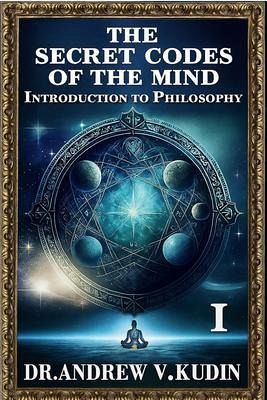
The SECRET CODES OF THE MIND: INTRODUCTION TO PHILOSOPHY: INTRODUCTION TO PHILOSOPHY (eBook, ePUB)
Academic Library Edition

PAYBACK Punkte
6 °P sammeln!

The Secret Codes of the Mind: An Introduction to Philosophy is the opening volume of a comprehensive six-volume textbook series by Andrew V. Kudin, PhD, representing more than forty years of academic and teaching experience. Written in clear, accessible language and grounded in rigorous scholarship, this work introduces readers to the essential questions, methods, and categories of philosophical inquiry that have shaped the evolution of human thought and civilization.Volume I serves as a foundational guide for students and general readers seeking a structured and integrative approach to philos...
The Secret Codes of the Mind: An Introduction to Philosophy is the opening volume of a comprehensive six-volume textbook series by Andrew V. Kudin, PhD, representing more than forty years of academic and teaching experience. Written in clear, accessible language and grounded in rigorous scholarship, this work introduces readers to the essential questions, methods, and categories of philosophical inquiry that have shaped the evolution of human thought and civilization.
Volume I serves as a foundational guide for students and general readers seeking a structured and integrative approach to philosophy. It combines historical depth with conceptual precision, presenting philosophy as a disciplined art of understanding reality, knowledge, and human freedom.
Content Overview:
. Lecture 1 - What is Philosophy?
Defines the scope, structure, and purpose of philosophy. Introduces its principal branches-metaphysics, epistemology, ethics, aesthetics, logic, and political philosophy-and explains their interrelation.
. Lecture 2 - Philosophical Methods
Examines the key methodological approaches that form the foundation of philosophical analysis, including dialectical, analytical, phenomenological, and existential methods. Demonstrates how these approaches function as practical tools of critical reasoning.
. Lecture 3 - Core Categories of Thought
Analyzes central philosophical categories-being, causality, truth, unity, and diversity-and explores their interpretation in the works of Aristotle, Immanuel Kant, Georg Wilhelm Friedrich Hegel, and Charles Sanders Peirce.
. Lecture 4 - Consciousness, Matter, Space, and Time
Traces the historical and conceptual development of these fundamental metaphysical categories across major philosophical traditions-from ancient cosmologies to modern scientific worldviews.
. Lecture 5 - The Concept of Freedom
Explores the philosophical dimensions of freedom, including free will, determinism, moral responsibility, and autonomy. Engages with classical and modern perspectives on human action and ethical choice.
With its systematic structure and emphasis on clarity, Volume I lays the groundwork for further study in metaphysics, epistemology, ethics, and the philosophy of mind. It is designed for use in university-level introductory philosophy courses and for independent readers seeking an academically informed, yet accessible entry into philosophical study.
Volume I serves as a foundational guide for students and general readers seeking a structured and integrative approach to philosophy. It combines historical depth with conceptual precision, presenting philosophy as a disciplined art of understanding reality, knowledge, and human freedom.
Content Overview:
. Lecture 1 - What is Philosophy?
Defines the scope, structure, and purpose of philosophy. Introduces its principal branches-metaphysics, epistemology, ethics, aesthetics, logic, and political philosophy-and explains their interrelation.
. Lecture 2 - Philosophical Methods
Examines the key methodological approaches that form the foundation of philosophical analysis, including dialectical, analytical, phenomenological, and existential methods. Demonstrates how these approaches function as practical tools of critical reasoning.
. Lecture 3 - Core Categories of Thought
Analyzes central philosophical categories-being, causality, truth, unity, and diversity-and explores their interpretation in the works of Aristotle, Immanuel Kant, Georg Wilhelm Friedrich Hegel, and Charles Sanders Peirce.
. Lecture 4 - Consciousness, Matter, Space, and Time
Traces the historical and conceptual development of these fundamental metaphysical categories across major philosophical traditions-from ancient cosmologies to modern scientific worldviews.
. Lecture 5 - The Concept of Freedom
Explores the philosophical dimensions of freedom, including free will, determinism, moral responsibility, and autonomy. Engages with classical and modern perspectives on human action and ethical choice.
With its systematic structure and emphasis on clarity, Volume I lays the groundwork for further study in metaphysics, epistemology, ethics, and the philosophy of mind. It is designed for use in university-level introductory philosophy courses and for independent readers seeking an academically informed, yet accessible entry into philosophical study.
Dieser Download kann aus rechtlichen Gründen nur mit Rechnungsadresse in A, D ausgeliefert werden.
Andere Kunden interessierten sich für