The Architect of the Digital Age: Maurice Wilkes (eBook, ePUB)

PAYBACK Punkte
0 °P sammeln!

While Alan Turing and John von Neumann provided the theoretical blueprints for the computer, the true digital revolution began not on paper, but in the meticulous reality of a working machine. That machine was the EDSAC, and its architect was the British scientist Maurice Wilkes.On May 6, 1949, Wilkes made history, launching the world's first practical, regularly operational stored-program computer. With this single achievement, he transformed abstraction into utility, founding the field of software engineering itself through his creation of the Initial Orders and the Subroutine Library.This c...
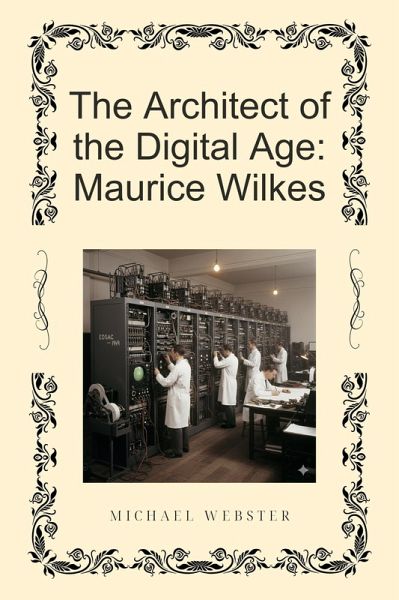
While Alan Turing and John von Neumann provided the theoretical blueprints for the computer, the true digital revolution began not on paper, but in the meticulous reality of a working machine. That machine was the EDSAC, and its architect was the British scientist Maurice Wilkes.
On May 6, 1949, Wilkes made history, launching the world's first practical, regularly operational stored-program computer. With this single achievement, he transformed abstraction into utility, founding the field of software engineering itself through his creation of the Initial Orders and the Subroutine Library.
This comprehensive biography delves into the fascinating paradox of Wilkes's life: a quiet, pragmatic engineer whose insistence on reliability and simplicity produced the most revolutionary technology of the century. Trace his monumental legacy through three pillars of computing history:
From the earliest flicker of a vacuum tube to the age of distributed systems, Maurice Wilkes's career mapped the entire lifespan of the digital world. This is the definitive story of the quiet genius who laid the indispensable groundwork for the modern age. Approx.160 pages, 31500 word count
On May 6, 1949, Wilkes made history, launching the world's first practical, regularly operational stored-program computer. With this single achievement, he transformed abstraction into utility, founding the field of software engineering itself through his creation of the Initial Orders and the Subroutine Library.
This comprehensive biography delves into the fascinating paradox of Wilkes's life: a quiet, pragmatic engineer whose insistence on reliability and simplicity produced the most revolutionary technology of the century. Trace his monumental legacy through three pillars of computing history:
- The practical birth of the Stored-Program Computer (EDSAC).
- The fundamental architectural innovation of Microprogramming.
- The pioneering work on local area networking with the Cambridge Ring.
From the earliest flicker of a vacuum tube to the age of distributed systems, Maurice Wilkes's career mapped the entire lifespan of the digital world. This is the definitive story of the quiet genius who laid the indispensable groundwork for the modern age. Approx.160 pages, 31500 word count
Dieser Download kann aus rechtlichen Gründen nur mit Rechnungsadresse in A, B, CY, CZ, D, DK, EW, E, FIN, F, GR, H, IRL, I, LT, L, LR, M, NL, PL, P, R, S, SLO, SK ausgeliefert werden.
Andere Kunden interessierten sich für