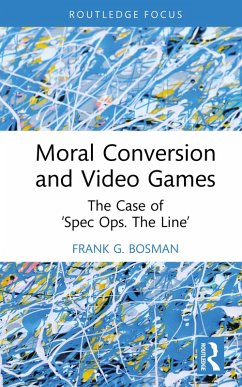
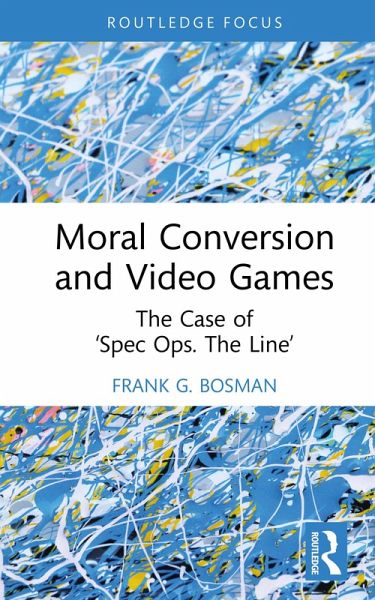
Moral Conversion and Video Games (eBook, PDF)
The Case of 'Spec Ops. The Line'

PAYBACK Punkte
11 °P sammeln!

Moral Conversion and Video Games is an in-depth exploration of Spec Ops: The Line, a critically acclaimed video game that subverts its genre by confronting players with the psychological and moral consequences of war.Disguised as a standard third-person shooter, the game gradually reveals a dark, self-critical narrative in which the player's choices, though seemingly free, lead to horrifying outcomes, most notably a white phosphorus attack on civilians. Praised for its story, aesthetic, and philosophical depth, the game has been interpreted as a critique of glorified violence, American excepti...
Moral Conversion and Video Games is an in-depth exploration of Spec Ops: The Line, a critically acclaimed video game that subverts its genre by confronting players with the psychological and moral consequences of war.
Disguised as a standard third-person shooter, the game gradually reveals a dark, self-critical narrative in which the player's choices, though seemingly free, lead to horrifying outcomes, most notably a white phosphorus attack on civilians. Praised for its story, aesthetic, and philosophical depth, the game has been interpreted as a critique of glorified violence, American exceptionalism, and the illusion of meaningful choice in video games. Its use of cognitive and ludo-narrative dissonance forces players to reflect on their own complicity in virtual violence. The game's mirrored reference to Raphael's Sistine Madonna, recast as a burned mother and child, deepens its ethical and even theological resonance.
This insightful and in-depth study will interest researchers and students of video game studies, moral philosophy, and cultural theology.
Disguised as a standard third-person shooter, the game gradually reveals a dark, self-critical narrative in which the player's choices, though seemingly free, lead to horrifying outcomes, most notably a white phosphorus attack on civilians. Praised for its story, aesthetic, and philosophical depth, the game has been interpreted as a critique of glorified violence, American exceptionalism, and the illusion of meaningful choice in video games. Its use of cognitive and ludo-narrative dissonance forces players to reflect on their own complicity in virtual violence. The game's mirrored reference to Raphael's Sistine Madonna, recast as a burned mother and child, deepens its ethical and even theological resonance.
This insightful and in-depth study will interest researchers and students of video game studies, moral philosophy, and cultural theology.
Dieser Download kann aus rechtlichen Gründen nur mit Rechnungsadresse in A, B, BG, CY, CZ, D, DK, EW, E, FIN, F, GR, HR, H, IRL, I, LT, L, LR, M, NL, PL, P, R, S, SLO, SK ausgeliefert werden.
Andere Kunden interessierten sich für