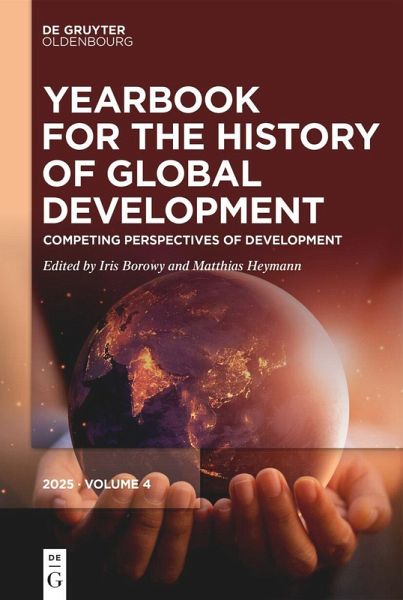
Competing Perspectives of Development (eBook, ePUB)

PAYBACK Punkte
0 °P sammeln!

Developmental policies frequently have contradictory effects. These typically play out in different sectors of life and are analyzed in different academic disciplines, using different assumptions, methods and bodies of literature. The results translate into conflicting political demands. This volume argues that keeping two separate narratives distorts reality and prevents a full understanding of development and its challenges.Over the last 200 years, life has become better. People around the world have grown taller and lived longer, benefitting from growing wealth, better nutrition, better hou...
Developmental policies frequently have contradictory effects. These typically play out in different sectors of life and are analyzed in different academic disciplines, using different assumptions, methods and bodies of literature. The results translate into conflicting political demands. This volume argues that keeping two separate narratives distorts reality and prevents a full understanding of development and its challenges.
Over the last 200 years, life has become better. People around the world have grown taller and lived longer, benefitting from growing wealth, better nutrition, better housing, better clothing, more tax revenues and better healthcare policies. Life has also become worse: two centuries of industrialization have caused pollution, wasteful consumerism and climate change threatening predominantly the livelihoods of those least responsible, exacerbating global inequality. But these narratives describe different but inseparable elements of the same history.
13 papers explore ways to integrate the "good" and "bad" narratives into coherent, intertwined histories, using theoretical analyses and case studies from five continents. It is the first publication to centrally focus on this question and its repercussions.
Over the last 200 years, life has become better. People around the world have grown taller and lived longer, benefitting from growing wealth, better nutrition, better housing, better clothing, more tax revenues and better healthcare policies. Life has also become worse: two centuries of industrialization have caused pollution, wasteful consumerism and climate change threatening predominantly the livelihoods of those least responsible, exacerbating global inequality. But these narratives describe different but inseparable elements of the same history.
13 papers explore ways to integrate the "good" and "bad" narratives into coherent, intertwined histories, using theoretical analyses and case studies from five continents. It is the first publication to centrally focus on this question and its repercussions.
Dieser Download kann aus rechtlichen Gründen nur mit Rechnungsadresse in A, B, BG, CY, CZ, D, DK, EW, E, FIN, F, GR, HR, H, IRL, I, LT, L, LR, M, NL, PL, P, R, S, SLO, SK ausgeliefert werden.
Andere Kunden interessierten sich für