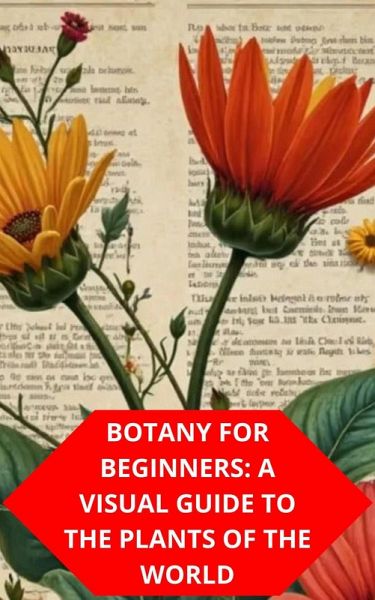
Botany For Beginners: A Visual Guide To The Plants Of The World (eBook, ePUB)

PAYBACK Punkte
0 °P sammeln!

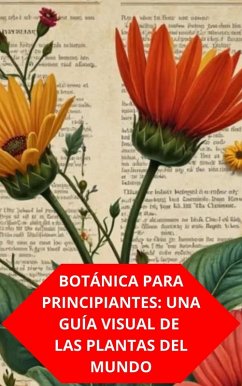
This work offers a clear and structured introduction to the science of plants, combining technical accuracy with accessible explanations for beginners. It presents the plant world as a system shaped by evolution, climate, soil, and time, explaining how botanical observation reveals patterns, rhythms, and adaptive strategies that link form and function. The text emphasizes the importance of careful observation, scientific rigor, and ethical research practices, noting that modern botany integrates traditional fieldwork with technological advancements such as genomic studies, high-resolution imag...
This work offers a clear and structured introduction to the science of plants, combining technical accuracy with accessible explanations for beginners. It presents the plant world as a system shaped by evolution, climate, soil, and time, explaining how botanical observation reveals patterns, rhythms, and adaptive strategies that link form and function. The text emphasizes the importance of careful observation, scientific rigor, and ethical research practices, noting that modern botany integrates traditional fieldwork with technological advancements such as genomic studies, high-resolution imaging, and environmental sensors. These tools expand the ability to understand plant physiology and ecology while demanding responsibility and methodological precision from researchers .
The material covers essential plant structures, evolutionary groups, and diagnostic characters used to distinguish lineages. It examines cell walls, reproductive strategies, plastid reserves, and the anatomical innovations that mark the transition from algae to bryophytes, pteridophytes, gymnosperms, and angiosperms. Reproductive cycles, seed development, dispersal strategies, and ecological interactions with pollinators and dispersers are explained in detail, offering a technical framework for identifying species and understanding their ecological roles . The text also explores the international rules that govern plant nomenclature, describing how scientific names are validated, published, typified, and maintained to ensure stability and clarity in global communication .
Fieldwork receives extensive attention, highlighting the tools, methods, and observational criteria that enable beginners to document plants with accuracy. The book details proper specimen collection, photographic documentation, labeling, and the use of magnifying lenses and microscopes for analyzing anatomical features. Guidelines are provided on how to produce reproducible descriptions using organized sequences, measurements, sketches, and comparisons with reference material. The importance of distinguishing subtle morphological features-such as placentation, venation patterns, fruit structures, and trichomes-is presented as essential for accurate identification and scientific recording .
Beyond foundational learning, the text expands into ecology, sustainability, and applied plant sciences. It examines global biomes, plant adaptation strategies, medicinal and aromatic species, and the roles of plants in energy production, biotechnology, and the bioeconomy. Discussions include plant-based materials, biorefineries, ecological restoration, and environmental monitoring using genetic and digital tools. Practical frameworks for conservation, field ethics, responsible sampling, and long-term data management are also presented, emphasizing the connection between botanical research and global environmental stewardship .
Rich in scientific content and grounded in observational logic, this work serves both as an educational guide and a technical reference, enabling beginners to understand plant biology from the cellular level to ecosystems while cultivating an informed appreciation for biodiversity and sustainability.
The material covers essential plant structures, evolutionary groups, and diagnostic characters used to distinguish lineages. It examines cell walls, reproductive strategies, plastid reserves, and the anatomical innovations that mark the transition from algae to bryophytes, pteridophytes, gymnosperms, and angiosperms. Reproductive cycles, seed development, dispersal strategies, and ecological interactions with pollinators and dispersers are explained in detail, offering a technical framework for identifying species and understanding their ecological roles . The text also explores the international rules that govern plant nomenclature, describing how scientific names are validated, published, typified, and maintained to ensure stability and clarity in global communication .
Fieldwork receives extensive attention, highlighting the tools, methods, and observational criteria that enable beginners to document plants with accuracy. The book details proper specimen collection, photographic documentation, labeling, and the use of magnifying lenses and microscopes for analyzing anatomical features. Guidelines are provided on how to produce reproducible descriptions using organized sequences, measurements, sketches, and comparisons with reference material. The importance of distinguishing subtle morphological features-such as placentation, venation patterns, fruit structures, and trichomes-is presented as essential for accurate identification and scientific recording .
Beyond foundational learning, the text expands into ecology, sustainability, and applied plant sciences. It examines global biomes, plant adaptation strategies, medicinal and aromatic species, and the roles of plants in energy production, biotechnology, and the bioeconomy. Discussions include plant-based materials, biorefineries, ecological restoration, and environmental monitoring using genetic and digital tools. Practical frameworks for conservation, field ethics, responsible sampling, and long-term data management are also presented, emphasizing the connection between botanical research and global environmental stewardship .
Rich in scientific content and grounded in observational logic, this work serves both as an educational guide and a technical reference, enabling beginners to understand plant biology from the cellular level to ecosystems while cultivating an informed appreciation for biodiversity and sustainability.
Dieser Download kann aus rechtlichen Gründen nur mit Rechnungsadresse in A, B, CY, CZ, D, DK, EW, E, FIN, F, GR, H, IRL, I, LT, L, LR, M, NL, PL, P, R, S, SLO, SK ausgeliefert werden.
Andere Kunden interessierten sich für