Advances in innovative postharvest egg pasteurization and disinfection technologies to optimize egg safety and quality (eBook, PDF)

PAYBACK Punkte
12 °P sammeln!

Eggs and egg products are staple foods worldwide. The main pathogens associated with egg and egg products are Salmonella spp., Listeria monocytogenes, Campylobacter spp., Escherichia spp., and Staphylococcus spp. Composition of the egg products influence the inactivation or survival of microorganisms in response to food safety interventions. The design of sanitation interventions depends on the likely location of contamination: on the shell, inside the egg, or both. Under any of these contamination scenarios, there is a real need to evaluate food processing technologies that can ensure the mic...
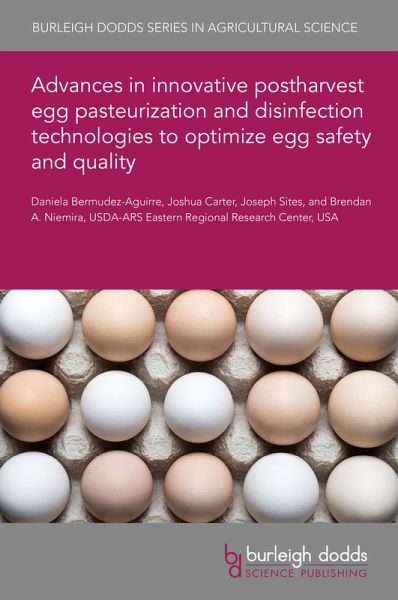
Eggs and egg products are staple foods worldwide. The main pathogens associated with egg and egg products are Salmonella spp., Listeria monocytogenes, Campylobacter spp., Escherichia spp., and Staphylococcus spp. Composition of the egg products influence the inactivation or survival of microorganisms in response to food safety interventions. The design of sanitation interventions depends on the likely location of contamination: on the shell, inside the egg, or both. Under any of these contamination scenarios, there is a real need to evaluate food processing technologies that can ensure the microbial safety of the eggs and limit the potential of cross-contamination. These technologies must preserve the quality and functionality of shell eggs and derived egg products, such as egg albumin. This chapter presents some of the innovations in egg processing technologies to enhance safety, preserve quality, and minimize the risk of contamination in the egg industry.
Dieser Download kann aus rechtlichen Gründen nur mit Rechnungsadresse in A, D ausgeliefert werden.
Andere Kunden interessierten sich für