A Simple Guide to Sub-arachnoid Hemorrhage, Diagnosis, Treatment and Related Conditions (eBook, ePUB)

PAYBACK Punkte
0 °P sammeln!

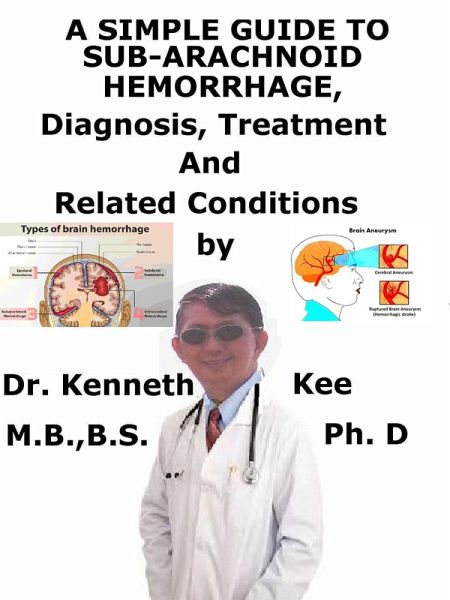
This book describes Sub-arachnoid Hemorrhage, Diagnosis and Treatment and Related Diseases A Sub-arachnoid Hemorrhage is bleeding into the cerebrospinal fluid filled space between the pial and arachnoid membrane of the brain. Most sub-arachnoid hemorrhages are caused by trauma. Aneurysm sub-arachnoid hemorrhage affects a small percentage of this patient population, but is the most troublesome type of sub-arachnoid hemorrhage. While sub-arachnoid hemorrhage is typical of aneurysm rupture, it often is also linked with intra-ventricular hemorrhage, intra-cerebral hemorrhage, and sub-dural hemorrh...
This book describes Sub-arachnoid Hemorrhage, Diagnosis and Treatment and Related Diseases A Sub-arachnoid Hemorrhage is bleeding into the cerebrospinal fluid filled space between the pial and arachnoid membrane of the brain. Most sub-arachnoid hemorrhages are caused by trauma. Aneurysm sub-arachnoid hemorrhage affects a small percentage of this patient population, but is the most troublesome type of sub-arachnoid hemorrhage. While sub-arachnoid hemorrhage is typical of aneurysm rupture, it often is also linked with intra-ventricular hemorrhage, intra-cerebral hemorrhage, and sub-dural hemorrhage. The force of the rupture and site of an aneurysm establish the presence of the other hemorrhages. Non-traumatic sub-arachnoid hemorrhage happens when: Rupture of a congenital arterial aneurysm (weak arterial wall) is the most frequent cause. Rupture of an arterial capillary or venous bleeding from one or multiple sites of origin. This can be from high blood pressure or brain infection. Capillary damage leading to hemorrhage can happen in certain form of encephalitis. Hemorrhagic diseases such as dengue fever, hemophilia, thrombocytopenia of unknown origin Intracranial tumors such as angioblastic meningioma, glioma, pituitary adenoma and intracranial metastases are rare but possible causes. Anticoagulant therapy particularly over dosage of warfarin Smoking has been linked with sub-arachnoid hemorrhage. Several factors are linked with sub-arachnoid hemorrhage such as: Hypertension, Cigarette smoking, Excessive alcohol consumption, Female gender, Age, Genetic syndromes like Ehlers-Danlos, and Polycystic kidney disease A normal manifesting symptom is a thunderclap headache. A headache often is linked with nausea, vomiting, and diplopia (double vision). Often signs of meningismus (Meningeal signs) are evident due to irritant blood spreading into the fourth ventricle and down the spinal cord irritating nerves and producing neck and back pain. Cranial nerve deficits can happen. The early evaluation of a patient suspected of having a sub-arachnoid hemorrhage should involve head computed tomogram A CT angiography should be done if a sub-arachnoid hemorrhage is identified Sub-arachnoid Hemorrhage is an emergency. Purpose of treatment is to: Preserve life Limit the amount of brain damage Lessen the extent of disability and deformity Prevent recurrence. Admission to hospital is necessary to determine The cause of the Sub-arachnoid Hemorrhage The extent of damage to the brain using MRI During the acute phase of Sub-arachnoid Hemorrhage: A clear airway must be maintained Adequate fluid and electrolyte intake maintained Adequate nutrition in the form of glucose, proteins and calories given Bed rest with adequate nursing care provided Proper medicines are given The treatment of sub-arachnoid hemorrhage patients should be done in the intensive care unit. If there is the presence of hydrocephalus, the placement of an external ventricular drain should be indicated. The use of nimodipine and euvolemia is important factors to improve outcomes. Blood pressure should be less than 160 mm Hg and best within the 140-mm Hg range. Seizure prophylaxis should be started as 20% patients will seize within first 24 hours Once the Sub-arachnoid Hemorrhage is stable: The Sub-arachnoid Hemorrhage patient is started on a rehabilitation program. exercises to strengthen his muscles, speech training for patients with dysphasia training on how to perform his daily activities. TABLE OF CONTENT Introduction Chapter 1 Sub-arachnoid Hemorrhage Chapter 2 Causes Chapter 3 Symptoms Chapter 4 Diagnosis Chapter 5 Treatment Chapter 6 Progn...
Dieser Download kann aus rechtlichen Gründen nur mit Rechnungsadresse in A, B, CY, CZ, D, DK, EW, E, FIN, F, GR, H, IRL, I, LT, L, LR, M, NL, PL, P, R, S, SLO, SK ausgeliefert werden.
Andere Kunden interessierten sich für