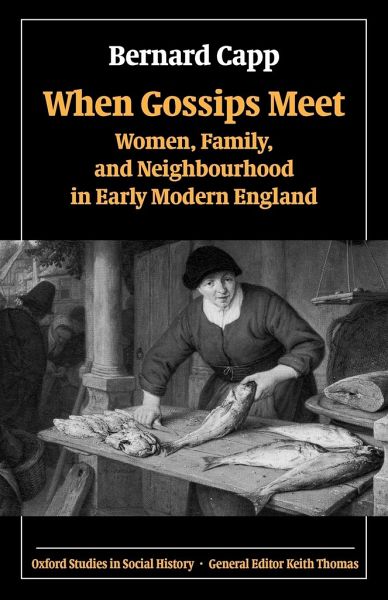
When Gossips Meet
Women, Family, and Neighbourhood in Early Modern England

PAYBACK Punkte
50 °P sammeln!

This book explores how women of the poorer and middling sorts in early modern England negotiated a patriarchal culture in which they were generally excluded, marginalized, or subordinated. It focuses on the networks of close friends ('gossips') which gave them a social identity beyond the narrowly domestic, providing both companionship and practical support in disputes with husbands and with neighbours of either sex. The book also examines the micropolitics of the household, with its internal alliances and feuds, and women's agency in neighbourhood politics, exercised by shaping local public opinion, exerting pressure on parish officials, and through the role of informal female juries. If women did not openly challenge male supremacy, they could often play a significant role in shaping their own lives and the life of the local community.
This book explores how women of the poorer and middling sorts in early modern England sought to make the best of their lives in a society that excluded or marginalized them in almost every sphere. It argues that networks of close friends ("gossips") provided invaluable moral and practical support, helping them to shape their own lives and to play an active role in the affairs of the local community.
Andere Kunden interessierten sich für