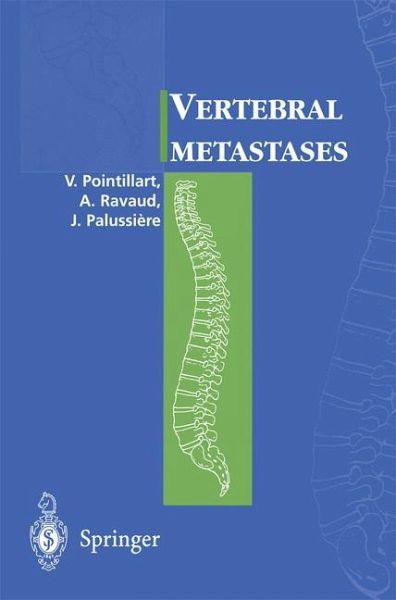
Vertebral metastases

PAYBACK Punkte
58 °P sammeln!

This book, the result of close collaboration between two very specialized centers, one in spinal surgery, the other in oncology, was written to take stock of the current data on vertebral metastases. It is intended as both a pratical guide for all those involved in this field of care and a didactic reference for those who are less familiar with either of these specialties. All aspects of current knowledge of metastases are considered. Regarding diagnostics, MRI is at present indispensable and nessecitates a broad iconography. In the therapeutics section, so as to restituate vertebral metastasis in its proper general context, a chapter is devoted to the particularities of the treatment in terms of the primary cancer. This is fundamental since the sensitivity of tumors to systemic treatment is clearly not the same from one case to another. The role of surgery in vertebral metastases has changed completely over the last ten years with the increasing use osteosynthesis combined with decompressive procedures. The explanation of these techniques and their indications is largely based upon providing a suitable response to the mechanical problems posed at each location in the spinal column. Vertebroplasty and biphosphonates, two recent additions to the therapeutic armamentarium are detailed, along with conventional treatments such as radiation therapy and the comprehensive approach to pain management. In the present context of technological advances against vertebral metastases, physicians must not lose sight of the patient as an individual. This imperative prompted us to include a chapter on nursing and psychological cared. Another chapter addresses the continuity of care, placing responsability for the patient's management at present solely in the hands of a multidisciplinary team. A methodological review of the literature concludes that there still remains much work to be done for better assessment of the responsability for the welfare of these patients. Two leading US spinal surgeons have accepted to endorse this manuscript: J.P. Farcy and N. Sundaresan. The question of their contributing to the book was naturally raised. However, it seemed preferable to preserve the homogenous spirit driving the original group of collaborators.
Tumors cells no longer confined to an affected organ can be released through lymph and the blood stream, disseminate and form metastases. Metastases to the spine are frequent, may be painful and may occur in an isolated or multiple level manner, they may lead to structural failure of the spinal column and cause com pression of nerve structures resulting in progressive paralysis or in painful radi culopathies. The dinical evaluation as weIl as to tumor pathophysiology are weIl explai ned in two general chapters and then each specific primary tumor is analyzed in a specific chapter. The choice was made to offer a multidisciplinary approach. One may thus find similar aspects repeated in different chapters, yet this is ne ces sary since each part of this textbook can be used as a specific reference. I was impressed by the carefully detailed humane approach to the patient information with care for the patient's dignity. Truthful information is explained dearly enough to give all the elements the patient needs to understand and accept neces sary treatments with a responsible attitude. Previously, when confronted with a patient suffering from a debilitating spine metastasis of a malignant tumor it has been almost always too late to offer anything more than compassionate ineffica cy. Surgical treatment was balanced with life expectancy and then only rarely indicated in certain specific cases.
Andere Kunden interessierten sich für