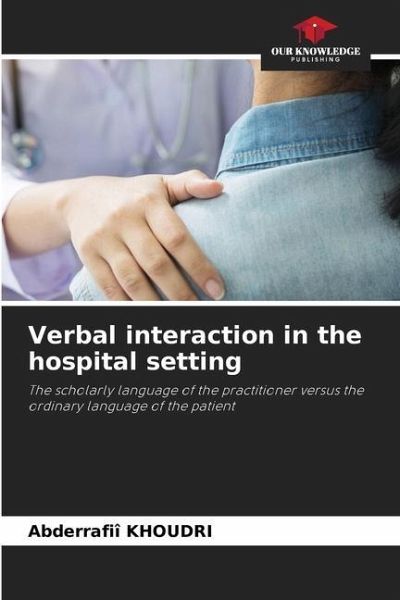
Verbal interaction in the hospital setting
The scholarly language of the practitioner versus the ordinary language of the patient
Versandkostenfrei!
Versandfertig in 6-10 Tagen
45,99 €
inkl. MwSt.

PAYBACK Punkte
23 °P sammeln!

The growing gap between practitioners and patients is not only explained by the disparity of language practices used in their exchanges. Several contextual parameters can constitute a handicap to interactive communication. The hospital context is characterized by an elitist mode of operation, with no room for the layman. An excessive influence of the face, divergent conceptions of the time factor and a partial management of the turns of speech during the patient-practitioner meeting are all concrete manifestations showing that it is not only language that comes into play in the process of inte...
The growing gap between practitioners and patients is not only explained by the disparity of language practices used in their exchanges. Several contextual parameters can constitute a handicap to interactive communication. The hospital context is characterized by an elitist mode of operation, with no room for the layman. An excessive influence of the face, divergent conceptions of the time factor and a partial management of the turns of speech during the patient-practitioner meeting are all concrete manifestations showing that it is not only language that comes into play in the process of intercomprehension. Following the logic developed in this book, it becomes clear that an edifying therapeutic relationship presupposes a communion of the modes of expression, attitudes and representations of the actors involved in the practitioner-patient communication.
Andere Kunden interessierten sich für