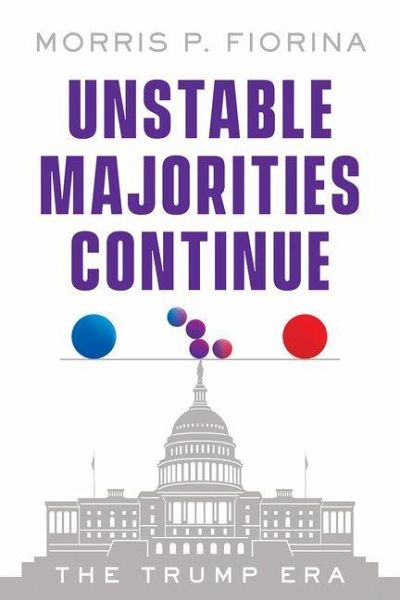
Unstable Majorities Continue
The Trump Era
Versandkostenfrei!
Erscheint vorauss. 1. März 2026
22,99 €
inkl. MwSt.

The United States is experiencing a period of electoral instability unprecedented in our history. Neither of the two major political parties reflects the political will of the majority of Americans, who must choose between candidates holding positions more extreme than those of the typical voter. With no true centrist party, Republicans and Democrats take turns as the party in charge. Unstable Majorities Continue: The Trump Era examines the current pattern of volatile party control that, from a historical perspective, is very unusual. It follows the author's 2017 book Unstable Majorities, whic...
The United States is experiencing a period of electoral instability unprecedented in our history. Neither of the two major political parties reflects the political will of the majority of Americans, who must choose between candidates holding positions more extreme than those of the typical voter. With no true centrist party, Republicans and Democrats take turns as the party in charge. Unstable Majorities Continue: The Trump Era examines the current pattern of volatile party control that, from a historical perspective, is very unusual. It follows the author's 2017 book Unstable Majorities, which identified this trend in analyzing the 2016 election. In contrast to the relatively stable party majorities that characterized preceding eras, since 1992 the country has experienced a period of unstable institutional majorities, where presidential candidates have earned relatively narrow margins of victory and control of the House and Senate has fluctuated. For several decades now, the verdict from the voting electorate has often been one of no confidence in whatever institutional pattern of control prevails. Why have American politics changed so dramatically? Fiorina states that the current nature of the country's political conflicts is misunderstood. After reforms, societal changes, and political coalition-building, the Republican and Democratic parties of today are much different organizations from those that operated in the past, becoming more homogeneous internally and more distant from each other--and from the public--in policy and ideology. The parties have polarized; the electorate has not. There are no indications that the 2024 elections have ended the era of unstable majorities. While the rise of populism contributes to present conflicts, it is a consequence more than a cause, with economic conditions ranking near the top of factors affecting party fortunes. By examining data and voting behavior on abortion, gun control, environmental regulation, and other issues, Fiorina argues that voter positions have largely stayed moderate over time. He dispels the commonly held belief that American voters have become politically polarized, creating a "Divided States of America."
Andere Kunden interessierten sich für