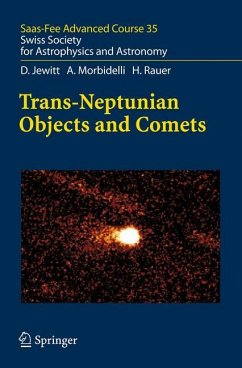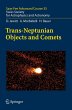
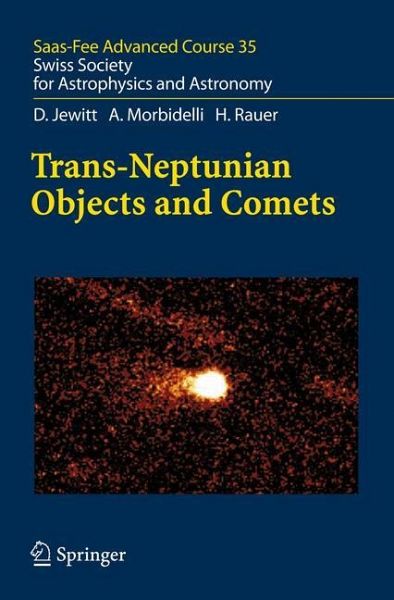
Trans-Neptunian Objects and Comets
Saas-Fee Advanced Course 35. Swiss Society for Astrophysics and Astronomy
Herausgegeben: Altwegg, Kathrin; Benz, Willy; Thomas, Nicolas
Versandkostenfrei!
Versandfertig in 6-10 Tagen
78,99 €
inkl. MwSt.
Weitere Ausgaben:

PAYBACK Punkte
39 °P sammeln!

The study of the Solar system, particularly of its newly discovered outer parts, is one of the hottest topics in modern astrophysics with great potential for revealing fundamental clues about the origin of planets and even the emergence of life.The three lecturers of the 35th Saas-Fee Advanced Course cover the field from observational, theoretical and numerical perspectives. Highly sensitive, wide-field electronic detectors have enabled the discovery and the exploration of the Kuiper Belt, while fast computers allow for numerical simulations to be made with a degree of sophistication previousl...
The study of the Solar system, particularly of its newly discovered outer parts, is one of the hottest topics in modern astrophysics with great potential for revealing fundamental clues about the origin of planets and even the emergence of life.
The three lecturers of the 35th Saas-Fee Advanced Course cover the field from observational, theoretical and numerical perspectives. Highly sensitive, wide-field electronic detectors have enabled the discovery and the exploration of the Kuiper Belt, while fast computers allow for numerical simulations to be made with a degree of sophistication previously unimaginable. Additionally, the perception of the Solar system in the bigger context of the galactic disk is changing, particularly as planets encircling other stars are detected. This volume, reviewing what is known about the Solar system, is therefore extremely timely, and the style it is written in conveys the excitement this field of research holds.
The three lecturers of the 35th Saas-Fee Advanced Course cover the field from observational, theoretical and numerical perspectives. Highly sensitive, wide-field electronic detectors have enabled the discovery and the exploration of the Kuiper Belt, while fast computers allow for numerical simulations to be made with a degree of sophistication previously unimaginable. Additionally, the perception of the Solar system in the bigger context of the galactic disk is changing, particularly as planets encircling other stars are detected. This volume, reviewing what is known about the Solar system, is therefore extremely timely, and the style it is written in conveys the excitement this field of research holds.
Andere Kunden interessierten sich für