Tooth Agenesis
A Clinical and Genetic Insight into Congenital Absence of Teeth
Versandkostenfrei!
Versandfertig in 6-10 Tagen
40,99 €
inkl. MwSt.

PAYBACK Punkte
20 °P sammeln!

Tooth agenesis (TA), affecting both primary and permanent dentitions, is a congenital anomaly characterized by the absence of one or more teeth. While less common in primary dentition, it can occur, often involving the mandibular incisors. In permanent dentition, the second premolars and lateral incisors are frequently affected. The prevalence varies among populations and can range from 2% to 10%. TA may occur sporadically or as part of a syndrome, with genetic factors playing a significant role in its development. Several genes have been identified as contributing to tooth agenesis, highlight...
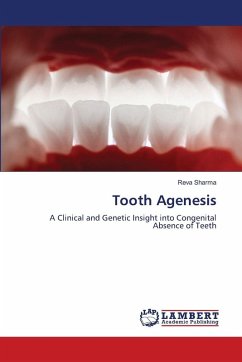
Tooth agenesis (TA), affecting both primary and permanent dentitions, is a congenital anomaly characterized by the absence of one or more teeth. While less common in primary dentition, it can occur, often involving the mandibular incisors. In permanent dentition, the second premolars and lateral incisors are frequently affected. The prevalence varies among populations and can range from 2% to 10%. TA may occur sporadically or as part of a syndrome, with genetic factors playing a significant role in its development. Several genes have been identified as contributing to tooth agenesis, highlighting the complexity of tooth development. Management strategies depend on factors such as the number and location of missing teeth, patient age, and overall dental health. Orthodontic treatment, prosthetic replacements, or dental implants are common approaches to addressing functional and aesthetic concerns. Early detection and intervention are essential to mitigate potential psychological implications and ensure optimal oral health and quality of life for affected individuals.