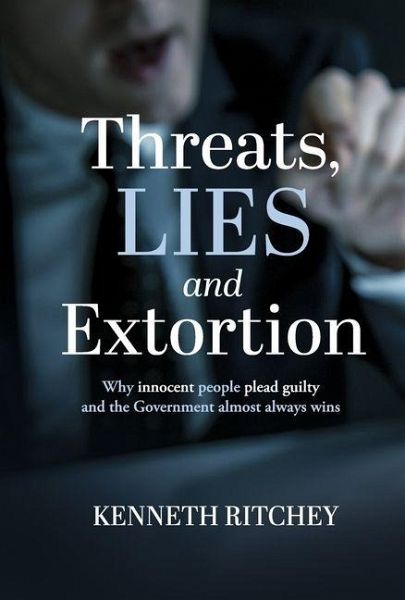
Threats, Lies and Extortion
Why Innocent People Plead Guilty and the Government Almost Always Wins

A True Story of Injustice is a gripping memoir chronicling Kenneth Ritchey's harrowing experience with the U.S. justice system. As the owner of Gulf Coast Pharmaceuticals Plus, a successful wholesale pharmaceutical company in Ocean Springs, Mississippi, Ritchey navigates the chaotic demand for personal protective equipment (PPE) during the COVID-19 pandemic. His business thrives by supplying critical medical gear, but in April 2020, an unexpected FBI raid disrupts his life, accusing him of hoarding PPE in violation of the Defense Production Act. Despite no evidence of wrongdoing, Ritchey faces...
A True Story of Injustice is a gripping memoir chronicling Kenneth Ritchey's harrowing experience with the U.S. justice system. As the owner of Gulf Coast Pharmaceuticals Plus, a successful wholesale pharmaceutical company in Ocean Springs, Mississippi, Ritchey navigates the chaotic demand for personal protective equipment (PPE) during the COVID-19 pandemic. His business thrives by supplying critical medical gear, but in April 2020, an unexpected FBI raid disrupts his life, accusing him of hoarding PPE in violation of the Defense Production Act. Despite no evidence of wrongdoing, Ritchey faces intense pressure from federal agents, media scrutiny, and a flawed legal process that coerces him into pleading guilty to avoid harsher penalties and protect his wife. The narrative traces Ritchey's journey from a military veteran and federal probation officer to a successful entrepreneur, only to be ensnared by a system that prioritizes convictions over justice. Sentenced to 60 months in FPC Pensacola, a minimum-security prison, he endures the psychological toll of the Residential Drug Abuse Program (RDAP), navigating its manipulative tactics and strict rules to secure early release. Through encounters with fellow inmates and reflections on high-profile cases, Ritchey exposes the systemic coercion that forces innocent people to plead guilty, drawing parallels to his own ordeal. Despite a successful appeal that challenges the inflated loss calculations used in his sentencing, Ritchey receives no relief, underscoring the justice system's resistance to correction. His story is one of resilience, bolstered by the unwavering support of his wife, Debra, and a newfound appreciation for life's simple moments. Ultimately, the memoir serves as a scathing critique of a corrupt legal system, a call for reform, and a testament to personal endurance in the face of injustice.
Andere Kunden interessierten sich für