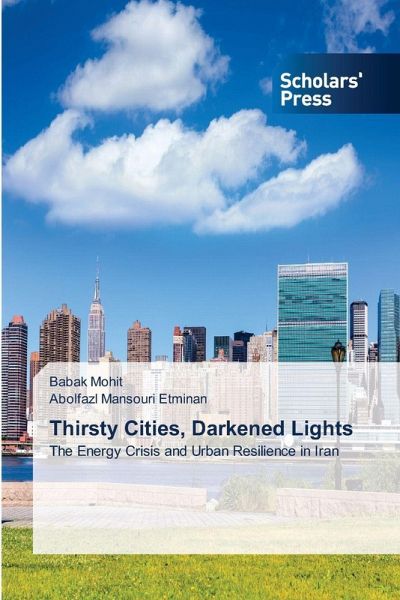
Thirsty Cities, Darkened Lights
The Energy Crisis and Urban Resilience in Iran
Versandkostenfrei!
Versandfertig in 6-10 Tagen
43,99 €
inkl. MwSt.

PAYBACK Punkte
22 °P sammeln!

Iran holds the world's third-largest oil reserves and second-largest natural gas reserves, yet is currently experiencing one of its most severe energy crises in decades ("Iranian energy crisis," 2025). Congestion in the power grid, aging infrastructure, and under-investment-compounded by international sanctions and chronic over-consumption resulting from expansive subsidies-have triggered nationwide power outages and gas shortages (Financial Times, 2024; "Lots of oil but no power," 2024). For example, electricity shortfalls reached an estimated 14,000 MW in summer 2024-equivalent to roughly tw...
Iran holds the world's third-largest oil reserves and second-largest natural gas reserves, yet is currently experiencing one of its most severe energy crises in decades ("Iranian energy crisis," 2025). Congestion in the power grid, aging infrastructure, and under-investment-compounded by international sanctions and chronic over-consumption resulting from expansive subsidies-have triggered nationwide power outages and gas shortages (Financial Times, 2024; "Lots of oil but no power," 2024). For example, electricity shortfalls reached an estimated 14,000 MW in summer 2024-equivalent to roughly twice Azerbaijan's total generation capacity ("Iranian energy crisis," 2025). This systemic vulnerability affects not only residential comfort but critical urban operations, including hospitals, transportation, and industrial production.
Andere Kunden interessierten sich für