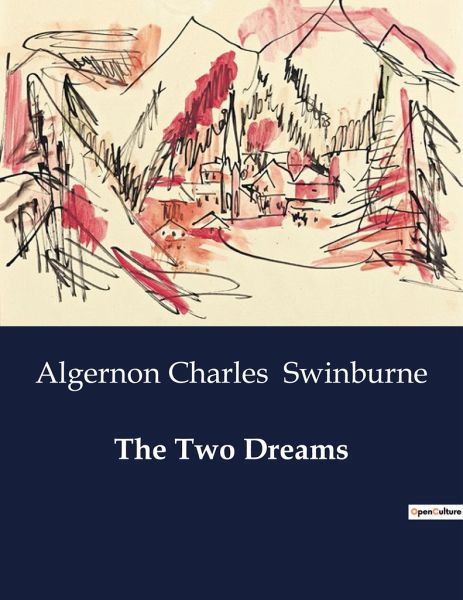
The Two Dreams
A Tale of Love and Loss in a Florentine Garden
Versandkostenfrei!
Versandfertig in 1-2 Wochen
17,00 €
inkl. MwSt.

PAYBACK Punkte
0 °P sammeln!

"The Two Dreams" by Algernon Charles Swinburne is a poetic narrative inspired by Boccaccio, exploring themes of love, dreams, and mortality. Set in a lush rose garden in Florence, the poem tells the story of a young maiden, Andrevuola, and her lover. The garden, a symbol of beauty and transience, serves as the backdrop for their intense and passionate relationship. The poem delves into the complexities of love, portraying it as both a source of profound joy and deep sorrow. Andrevuola's lover, consumed by his feelings, expresses his devotion and the pain it brings, while she reciprocates with ...
"The Two Dreams" by Algernon Charles Swinburne is a poetic narrative inspired by Boccaccio, exploring themes of love, dreams, and mortality. Set in a lush rose garden in Florence, the poem tells the story of a young maiden, Andrevuola, and her lover. The garden, a symbol of beauty and transience, serves as the backdrop for their intense and passionate relationship. The poem delves into the complexities of love, portraying it as both a source of profound joy and deep sorrow. Andrevuola's lover, consumed by his feelings, expresses his devotion and the pain it brings, while she reciprocates with equal intensity. Their love, however, is overshadowed by ominous dreams and premonitions of death. Andrevuola dreams of her lover being consumed by a monstrous creature, a change that foreshadows his eventual demise. The poem captures the fleeting nature of happiness and the inevitability of loss, as Andrevuola is left to mourn her lover's death. In her grief, she arranges for his burial in the garden, surrounded by the beauty of nature. The narrative concludes with Andrevuola's own death, a result of her heartache and longing. Swinburne's rich imagery and lyrical language evoke the emotional depth of the characters' experiences, highlighting the intertwined nature of love and suffering.
Andere Kunden interessierten sich für