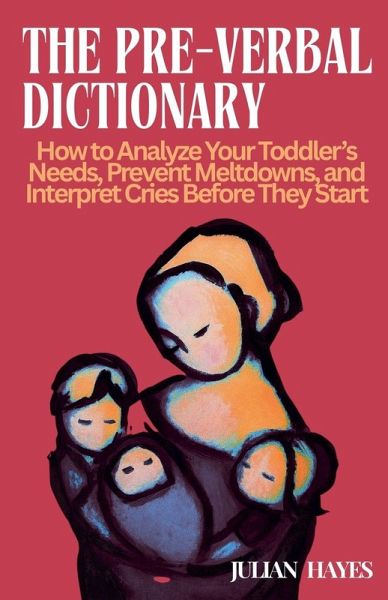
The Pre-Verbal Dictionary

PAYBACK Punkte
10 °P sammeln!

Stop guessing. Start knowing. It is 5:45 PM. Your toddler is screaming. You have checked the diaper. You have offered the snack. You have tried the hug. Nothing is working. In the chaos of a meltdown, most parents feel helpless. We feel trapped in a guessing game, trying random solutions for a problem we cannot see. But what if the scream wasn't a mystery? What if it was a specific message? Your child is not just "acting out"-they are communicating. The Pre-Verbal Dictionary is the practical guide you wish you were handed at the hospital. Forget "tough love" or simply "waiting it out." This bo...
Stop guessing. Start knowing. It is 5:45 PM. Your toddler is screaming. You have checked the diaper. You have offered the snack. You have tried the hug. Nothing is working. In the chaos of a meltdown, most parents feel helpless. We feel trapped in a guessing game, trying random solutions for a problem we cannot see. But what if the scream wasn't a mystery? What if it was a specific message? Your child is not just "acting out"-they are communicating. The Pre-Verbal Dictionary is the practical guide you wish you were handed at the hospital. Forget "tough love" or simply "waiting it out." This book offers a radical shift in perspective: moving from the emotional stress of a reactive parent to the calm confidence of an observant guide. Through proven observation techniques, you will learn to spot the silent signals that appear minutes-sometimes hours-before the explosion. You will learn to translate your child's non-verbal cues, including:The 3-Second Scan: How to check the eyes, hands, and feet to gauge their emotional state instantly. The Brow Signal: Why a "Knitted Brow" predicts discomfort, while a "Dropped Brow" signals deep focus. The White Lip: The subtle sign of rising frustration that appears 30 seconds before a tantrum. Decoding the Cry: Distinguishing the "Whiny Drone" of boredom from the sharp "Spike" of physical needs. The Energy Paradox: Why a child running in circles is often more exhausted than a child falling asleep. Stop taking the meltdown personally. Stop viewing behavior as "naughty." Start seeing the hidden needs. With The Pre-Verbal Dictionary, you will finally learn to speak the language your child has been using all along. It's time to turn off the drama and turn on the understanding.
Andere Kunden interessierten sich für