The Note
Versandkostenfrei!
Versandfertig in über 4 Wochen
11,99 €
inkl. MwSt.

PAYBACK Punkte
6 °P sammeln!

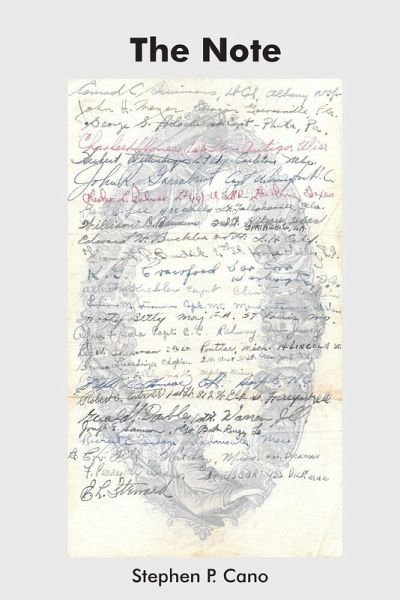
Captain Robert C. Crisson could not believe his eyes. He had just opened his military trunk for the first time since the D-Day invasion of Normandy on June 6, 1944. On that fateful day, Captain Crisson was hit with shrapnel from a German 88 (an 88-millimeter cannon) and wounded in the left leg. The shrapnel also hit a red smoke grenade in his gear, which when combined with the water, made it look like he was bleeding all over. The medics thought he was dead, so they took all his personal effects and sent them to Kansas City, where the military stored the belongings of its deceased. All of Capt...
Captain Robert C. Crisson could not believe his eyes. He had just opened his military trunk for the first time since the D-Day invasion of Normandy on June 6, 1944. On that fateful day, Captain Crisson was hit with shrapnel from a German 88 (an 88-millimeter cannon) and wounded in the left leg. The shrapnel also hit a red smoke grenade in his gear, which when combined with the water, made it look like he was bleeding all over. The medics thought he was dead, so they took all his personal effects and sent them to Kansas City, where the military stored the belongings of its deceased. All of Captain Crisson's highly classified maps and codes were sent there and a couple months later to his mother's house, where they stayed until a couple of years after the war. One day, Captain Crisson's mother turned to him and said, "Would you look in this old foot locker?" And there they were. His secret maps and codes which he framed and proudly hung in his house. Inside this trunk were many war artifacts and, of course, memories, including a large French Cino Cents Francs banknote, signed by a number of unknown men. Years later and after Captain Crisson had passed away, I became friends with his daughter, Michele, who graciously gifted me this French banknote in appreciation of my remembrance of her father and our friendship. After much research and to my astonishment, I began uncovering story after story. These men were not simply war-time friends but rather all intertwined through the historic D-Day invasion of June 6, 1944. I began to see Captain Crisson's banknote in an entirely different light. This was a work of art - from the fascinating stories behind each signature, to the selection of the French banknote type. Captain Crisson's French banknote began a D-Day story that would take on a life of its own, bringing to light new stories of the greatest generation in American history.
Andere Kunden interessierten sich für




![Cover A Little Inside History of How the Government Treated the Bank Note Contract, and the Encouragement Given to Canadian Investment [microform]](https://bilder.buecher.de/produkte/75/75458/75458388n.jpg "A Little Inside History of How the Government Treated the Bank Note Contract, and the Encouragement Given to Canadian Investment [microform]")