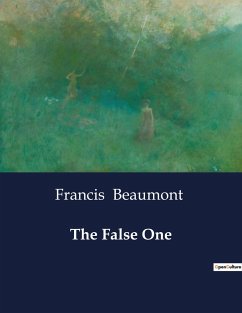

The False One
A Tragic Tale of Power, Betrayal, and transition in Ancient Egypt
Versandkostenfrei!
Versandfertig in 1-2 Wochen
15,00 €
inkl. MwSt.
Weitere Ausgaben:

PAYBACK Punkte
0 °P sammeln!

"The False One" is a tragedy co-authored by Francis Beaumont and John Fletcher, set in the tumultuous period of ancient Egypt during the Roman Civil Wars. The play opens with the political machinations surrounding the young King Ptolemy and his sister Cleopatra, who is held captive by the king's advisor, Photinus. The narrative unfolds against the backdrop of Julius Caesar's pursuit of Pompey, who seeks refuge in Egypt after his defeat at the Battle of Pharsalia. The play explores themes of loyalty, power, and betrayal as Photinus and Achillas, the captain of the guard, plot to secure their in...
"The False One" is a tragedy co-authored by Francis Beaumont and John Fletcher, set in the tumultuous period of ancient Egypt during the Roman Civil Wars. The play opens with the political machinations surrounding the young King Ptolemy and his sister Cleopatra, who is held captive by the king's advisor, Photinus. The narrative unfolds against the backdrop of Julius Caesar's pursuit of Pompey, who seeks refuge in Egypt after his defeat at the Battle of Pharsalia. The play explores themes of loyalty, power, and betrayal as Photinus and Achillas, the captain of the guard, plot to secure their influence by presenting Pompey's severed head to Caesar. This act of treachery, however, does not earn Caesar's favor as expected. Instead, Caesar mourns the loss of Pompey, recognizing the nobility of his former rival and condemning the Egyptians for their betrayal. Cleopatra, meanwhile, seeks to leverage her beauty and charm to gain Caesar's support and reclaim her rightful place as queen. The play delves into the complexities of political alliances and the personal changes that drive the characters, ultimately leading to a tragic conclusion. Through its intricate plot and rich character development, "The False One" offers a poignant commentary on the nature of power and the human cost of political change.
Andere Kunden interessierten sich für