The Battle of Hengyang
Japan's Fateful Siege in World War II
Versandkostenfrei!
Erscheint vorauss. 15. Mai 2026
24,99 €
inkl. MwSt.

In April 1944, Imperial Japan launched Operation Ichi -Go in order to secure a transcontinental transport route across China into Southeast Asia as well as to eliminate American air bases there. The Japanese army quickly overran Chinese resistance and pushed fast toward the city of Hengyang, a key railway junction in south-central China and site of a major U.S. base. The Battle of Hengyang began on June 23, 1944. With just 17,000 troops and besieged in an area of less than ten square miles, the Chinese 10th Army held off a Japanese force totaling more than 110,000 men, supported by aircraft an...
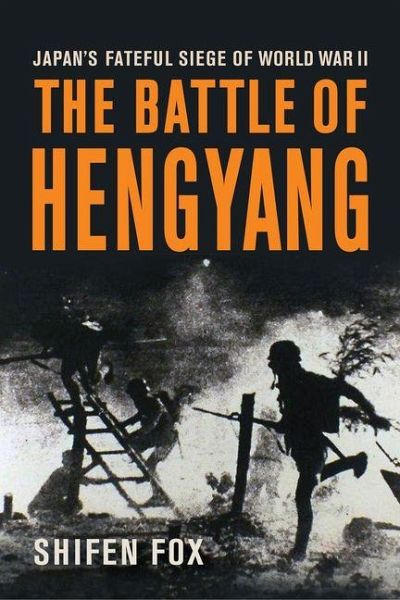
In April 1944, Imperial Japan launched Operation Ichi -Go in order to secure a transcontinental transport route across China into Southeast Asia as well as to eliminate American air bases there. The Japanese army quickly overran Chinese resistance and pushed fast toward the city of Hengyang, a key railway junction in south-central China and site of a major U.S. base. The Battle of Hengyang began on June 23, 1944. With just 17,000 troops and besieged in an area of less than ten square miles, the Chinese 10th Army held off a Japanese force totaling more than 110,000 men, supported by aircraft and artillery, for forty-seven days. The fighting was among the most savage of the entire war. Hengyang finally fell on August 8, but the Chinese defenders killed an estimated 20,000 Japanese soldiers and wounded tens of thousands more, frustrating Ichi-Go's momentum. The Japanese military's failure to quickly conquer such a small city led to the fall of Japanese Prime Minister Tojo's cabinet in July 1944, ultimately weakening Japan's resolve to prosecute the war. News accounts compared the Battle of Hengyang to the German defeat at Stalingrad and to the Battle of Suiyang, the most famous siege in ancient Chinese history. In the aftermath of World War II, once the Communists secured control of mainland China, the Battle of Hengyang was erased from Chinese history books since it was heroically fought by Chinese Nationalists. The Communist propaganda insisted that only they had successfully resisted the Japanese during World War II. But the survivors, both soldiers and civilians, kept the battle alive in their memories, and during the early part of the twenty-first century, the truth of Hengyang was presented to the Chinese people. The Battle of Hengyang: Japan's Fateful Siege of World War II by Shifen Fox is the first English language history of one of the most important battles of the Second World War.