

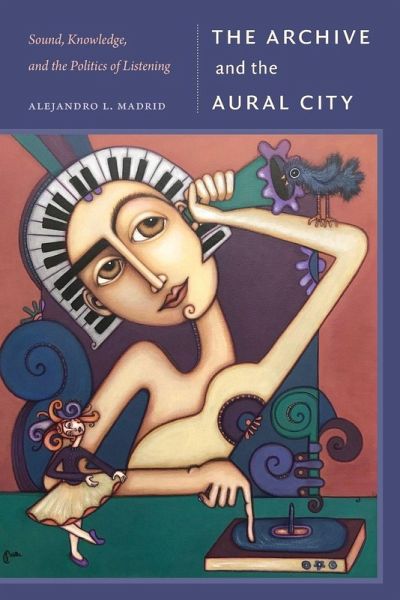
The Archive and the Aural City
Sound, Knowledge, and the Politics of Listening

PAYBACK Punkte
18 °P sammeln!

In The Archive and the Aural City, Alejandro L. Madrid examines the possibilities for retrieving from the archive sounds that were not meant to be heard. Drawing on Ángel Rama's notion of the Lettered City, Madrid proposes a notion of the Aural City-a Latin American urban intellectual elite for whom sound and listening are central to the creation, re-creation, and circulation of new types of knowledge. While many of these elites carry forward a nationalistic agenda, Madrid contends that the Aural City's archives and the ways they are listened to and conceived through sound and music can also ...
In The Archive and the Aural City, Alejandro L. Madrid examines the possibilities for retrieving from the archive sounds that were not meant to be heard. Drawing on Ángel Rama's notion of the Lettered City, Madrid proposes a notion of the Aural City-a Latin American urban intellectual elite for whom sound and listening are central to the creation, re-creation, and circulation of new types of knowledge. While many of these elites carry forward a nationalistic agenda, Madrid contends that the Aural City's archives and the ways they are listened to and conceived through sound and music can also help dismantle dominant frameworks of national or colonial culture and build more inclusive spaces for intellectual exchange and political mobilization. From national archives in Latin America and colonial institutions abroad to sound exhibits, instruments, and internet-based archival projects, Madrid demonstrates how the development of urban spaces is understood through sound. In this way, he expands understandings of the archive's social and sonic power.