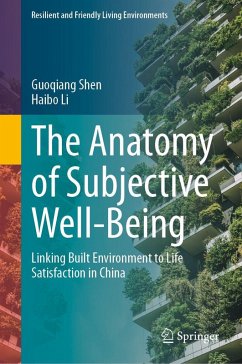
The Anatomy of Subjective Well-Being
Linking Built Environment to Life Satisfaction in China
Versandkostenfrei!
Versandfertig in 6-10 Tagen
91,99 €
inkl. MwSt.

PAYBACK Punkte
46 °P sammeln!

How does the high-density urban environment shape the subjective well-being of millions? This book tackles this pressing question in the context of China's unprecedented urbanization. Through a rigorous case study of Guangzhou, it employs quantitative methods to dissect the complex links between the built environment and subjective well-being. Its groundbreaking contribution lies in systematically revealing the underlying mechanisms via perceived quality, perceived safety, social capital, and health that mediate this relationship, offering a fresh perspective on the urban "Easterlin Paradox." ...
How does the high-density urban environment shape the subjective well-being of millions? This book tackles this pressing question in the context of China's unprecedented urbanization. Through a rigorous case study of Guangzhou, it employs quantitative methods to dissect the complex links between the built environment and subjective well-being. Its groundbreaking contribution lies in systematically revealing the underlying mechanisms via perceived quality, perceived safety, social capital, and health that mediate this relationship, offering a fresh perspective on the urban "Easterlin Paradox." Bridging theory and practice, the book translates these insights into actionable strategies for urban planners, policymakers, and community managers. Essential reading for scholars, students, and practitioners shaping the future of cities.
Andere Kunden interessierten sich für