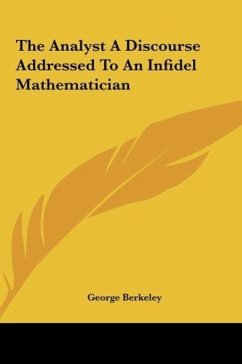
George Berkeley was born on March 12, 1685, at Dysart Castle, Ireland, to William Berkeley and Elisabeth Southerne. An Anglo-Irish philosopher, writer, and clergyman, he became one of the most influential thinkers of the early modern period. Educated at Trinity College, Dublin, Berkeley developed the doctrine of immaterialism, later known as subjective idealism, which proposed that reality exists only as perceptions within the mind. This philosophical stance challenged the materialist ideas of his time and redefined the relationship between perception, existence, and divine order. Deeply influenced by thinkers such as John Locke, Rene Descartes, and Nicolas Malebranche, Berkeley sought to reconcile empirical observation with spiritual truth, arguing that the existence of all things depends on their being perceived by God. His works, including A Treatise Concerning the Principles of Human Knowledge and Three Dialogues between Hylas and Philonous, profoundly shaped subsequent philosophical thought. Beyond philosophy, he served as a bishop and advocated education and moral reform. Married to Anne Forster from 1728 until his death, Berkeley passed away on January 14, 1753, in Oxford, leaving a lasting intellectual and theological legacy.