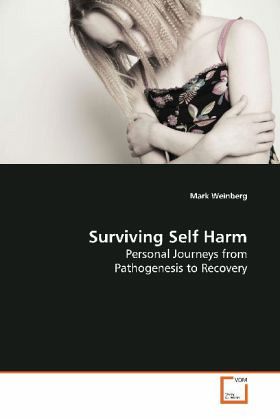
Surviving Self Harm
Personal Journeys from Pathogenesis to Recovery
Versandkostenfrei!
Versandfertig in 6-10 Tagen
32,99 €
inkl. MwSt.

PAYBACK Punkte
16 °P sammeln!

The last decade has witnessed a marked increase inthe incidence of self harm. Along with thisproliferation has come increased public and clinicalinterest in understanding and treating theseseemingly counterintuitive behaviors. This bookfocuses on the personal experiences of survivors inorder to gain insight into the experience oftransition towards, living with, and recovery fromself harm. The author utilized the Grounded Theorymethod to develop a theoretical model describing aprocess whereby: (a) exclusive and/or intrusiveexperiences play a central role in precipitatingpathogenesis of delibera...
The last decade has witnessed a marked increase in
the incidence of self harm. Along with this
proliferation has come increased public and clinical
interest in understanding and treating these
seemingly counterintuitive behaviors. This book
focuses on the personal experiences of survivors in
order to gain insight into the experience of
transition towards, living with, and recovery from
self harm. The author utilized the Grounded Theory
method to develop a theoretical model describing a
process whereby: (a) exclusive and/or intrusive
experiences play a central role in precipitating
pathogenesis of deliberate self-harm, (b) a sense of
loss of control results from these
exclusive/intrusive experiences, (c) self-harming
behaviours occur in an attempt to manage this sense
of loss of control, and (d) continued
exclusionary/intrusive experiences act to maintain
self-harming behaviours. Recovery occurs in the
context of an environmental shift, leading to the
experience of social inclusion, which facilitates a
sense of control.
the incidence of self harm. Along with this
proliferation has come increased public and clinical
interest in understanding and treating these
seemingly counterintuitive behaviors. This book
focuses on the personal experiences of survivors in
order to gain insight into the experience of
transition towards, living with, and recovery from
self harm. The author utilized the Grounded Theory
method to develop a theoretical model describing a
process whereby: (a) exclusive and/or intrusive
experiences play a central role in precipitating
pathogenesis of deliberate self-harm, (b) a sense of
loss of control results from these
exclusive/intrusive experiences, (c) self-harming
behaviours occur in an attempt to manage this sense
of loss of control, and (d) continued
exclusionary/intrusive experiences act to maintain
self-harming behaviours. Recovery occurs in the
context of an environmental shift, leading to the
experience of social inclusion, which facilitates a
sense of control.
Andere Kunden interessierten sich für