Natalie Haynes
Gebundenes Buch
Stone Blind
Versandkostenfrei!
Versandfertig in über 4 Wochen
Weitere Ausgaben:
PAYBACK Punkte
10 °P sammeln!
Natalie Haynes, Women's Prize-shortlisted author of A Thousand Ships, brings life to the infamous myth of Medusa with a heartbreaking, feminist retelling unlike any other.
Natalie Haynes is a writer and broadcaster. She is the author of The Amber Fury, The Children of Jocasta, and A Thousand Ships, which was shortlisted for the Women's Prize for Fiction. Her non-fiction book about women in Greek Myth, Pandora's Jar, was a New York Times Bestseller in 2022. She has written and performed eight series of her BBC Radio 4 show, Natalie Haynes Stands Up for the Classics. In 2015 she was awarded the Classical Association Prize for her work in bringing Classics to a wider audience. Stone Blind is her fourth novel.
Produktdetails
- Verlag: Pan Macmillan
- Seitenzahl: 384
- Erscheinungstermin: 15. September 2022
- Englisch
- Abmessung: 239mm x 157mm x 37mm
- Gewicht: 610g
- ISBN-13: 9781529061475
- ISBN-10: 1529061474
- Artikelnr.: 63691881
Herstellerkennzeichnung
Libri GmbH
Europaallee 1
36244 Bad Hersfeld
gpsr@libri.de
Witty, gripping, ruthless Margaret Atwood, author of The Handmaid's Tale, via X (Twitter)
"Witty, gripping, ruthless." - Margaret Atwood
"An exceptionally powerful retelling of Medusa's story, an emotional gut punch of a novel. Haynes brilliantly pulls off the feat of seamlessly alternating humour and heartbreak, creating characters that stay with you long after the novel's end. It is a dazzling achievement." - Elodie Harper, author of The Wolf Den trilogy
"Feels at once bitingly (post)modern and filled with old wisdom . . . Stone Blind acts as a brilliant and compellingly readable corrective." - The Guardian
"This dynamic retelling of a well-known myth encourages the reader to consider how legends reflect society's
"An exceptionally powerful retelling of Medusa's story, an emotional gut punch of a novel. Haynes brilliantly pulls off the feat of seamlessly alternating humour and heartbreak, creating characters that stay with you long after the novel's end. It is a dazzling achievement." - Elodie Harper, author of The Wolf Den trilogy
"Feels at once bitingly (post)modern and filled with old wisdom . . . Stone Blind acts as a brilliant and compellingly readable corrective." - The Guardian
"This dynamic retelling of a well-known myth encourages the reader to consider how legends reflect society's
Mehr anzeigen
beliefs, and how they are shaped by tellers." - Washington Post
"The rollicking narrative voice that energises Stone Blind . . . is a voice that feels at once bitingly (post)modern and filled with old wisdom . . . The Gorgon's head will take on a new and powerful resonance as a symbol of the way stories can be warped by time. Stone Blind acts as a brilliant and compellingly readable corrective." - The Observer
"With this, her third novel based on ancient myth, [Haynes] has found a way of using all her classical erudition and her vivid sense of the ambiguous potency of the ancient stories, while being simultaneously very, very funny." - The Guardian
"A fierce feminist exploration of female rage, written with wit and empathy. Haynes makes the classics brutally relevant, and we reckon this one is going to be huge." - Glamour (UK)
"It is no exaggeration to say that Haynes is the modern embodiment of the best of Homer. She is a proper, classic storyteller, whose linguistic skills and wit will have you hanging on every word." - Radio Times
"Stone Blind is inventive and playful . . . [and] very funny." - Antonia Senior, The Times (UK)
"Pat Barker, Margaret Atwood and Madeline Miller have all successfully picked at the seams of the traditionally male take on these fantastic tales. But Natalie Haynes's genius, this time with Stone Blind, her third Greek myth novel, is to not just focus on the female experience of Greek myth but also to add zest, humour and more than a little mischief . . . The ride is gripping, funny and heartbreaking. Love, sorrow, adventure and humour - Stone Blind has it all." - Metro (UK)
"What makes a monster is the central question in Natalie Haynes' wry, spry feminist take on the Medusa myth . . . an earthy, playful yet rage-filled upending of the Greek hero trope." - Mail Online
"With wit, humanity and extraordinary imagination, Haynes breathes life and meaning into myths as she has done so brilliantly before (most famously with A Thousand Ships). She also shows that monsters can be divine or mortal. Not all heroes wear capes - and not all villains have snakes." - The i
"Haynes' clever, empathetic writing transforms Medusa from Gorgon into a girl, who's a victim of the cruel machinations of the gods and of circumstance." - Sarra Manning, Red Magazine
"Natalie Haynes has made a contemporary classic out of a classic . . . and it should win prizes." - Monique Roffey, author of The Mermaid of Black Conch
"There's real tenderness in Haynes's portrait of Medusa, a mortal abomination born into a family of divinities, and the efforts of her immortal Gorgon sisters to protect her from herself." - Daisy Dunn, The Spectator
"Haynes is [a] master of her trade . . . She succeeds in breathing warm life into some of our oldest stories." - Telegraph (UK)
"Haynes is the nation's great muse." - Adam Rutherford, The Week (UK)
"Natalie Haynes is swiftly becoming this generation's Mary Renault." - Observer
"Haynes reframes the story of Medusa from Greek mythology as one of victim-shaming in this sharp retelling... [Her] inventive reappraisal extends to her narrative devices, including rueful passages from the perspective of Medusa's severed head...and she invites the reader into Medusa's point of view with rich sensory details... Hayes conveys an urgency to Medusa's life as a mortal woman among vengeful gods. Fans of feminist retellings will love this." - Publishers Weekly
Feminist retellings of Greek myths are all the rage, and Haynes . . . stands among the foremost authors in this area. [This] novel melds her classics expertise . . . with a conversational style and biting humor. . . . This tale evokes passionate fury on behalf of its heroine, a tragic victim of male violence. Her death scene is utterly heartbreaking. It all begs the question, How could we have gotten Medusa's story so wrong?" - Booklist
"Haynes also has a delightfully droll sense of humor, which she brings to bear on her deities...By the time I finished this otherworldly cri de coeur, I felt both wiser for it and glad that it had been written." - Lucinda Rosenfeld, New York Times Book Review
"The rollicking narrative voice that energises Stone Blind . . . is a voice that feels at once bitingly (post)modern and filled with old wisdom . . . The Gorgon's head will take on a new and powerful resonance as a symbol of the way stories can be warped by time. Stone Blind acts as a brilliant and compellingly readable corrective." - The Observer
"With this, her third novel based on ancient myth, [Haynes] has found a way of using all her classical erudition and her vivid sense of the ambiguous potency of the ancient stories, while being simultaneously very, very funny." - The Guardian
"A fierce feminist exploration of female rage, written with wit and empathy. Haynes makes the classics brutally relevant, and we reckon this one is going to be huge." - Glamour (UK)
"It is no exaggeration to say that Haynes is the modern embodiment of the best of Homer. She is a proper, classic storyteller, whose linguistic skills and wit will have you hanging on every word." - Radio Times
"Stone Blind is inventive and playful . . . [and] very funny." - Antonia Senior, The Times (UK)
"Pat Barker, Margaret Atwood and Madeline Miller have all successfully picked at the seams of the traditionally male take on these fantastic tales. But Natalie Haynes's genius, this time with Stone Blind, her third Greek myth novel, is to not just focus on the female experience of Greek myth but also to add zest, humour and more than a little mischief . . . The ride is gripping, funny and heartbreaking. Love, sorrow, adventure and humour - Stone Blind has it all." - Metro (UK)
"What makes a monster is the central question in Natalie Haynes' wry, spry feminist take on the Medusa myth . . . an earthy, playful yet rage-filled upending of the Greek hero trope." - Mail Online
"With wit, humanity and extraordinary imagination, Haynes breathes life and meaning into myths as she has done so brilliantly before (most famously with A Thousand Ships). She also shows that monsters can be divine or mortal. Not all heroes wear capes - and not all villains have snakes." - The i
"Haynes' clever, empathetic writing transforms Medusa from Gorgon into a girl, who's a victim of the cruel machinations of the gods and of circumstance." - Sarra Manning, Red Magazine
"Natalie Haynes has made a contemporary classic out of a classic . . . and it should win prizes." - Monique Roffey, author of The Mermaid of Black Conch
"There's real tenderness in Haynes's portrait of Medusa, a mortal abomination born into a family of divinities, and the efforts of her immortal Gorgon sisters to protect her from herself." - Daisy Dunn, The Spectator
"Haynes is [a] master of her trade . . . She succeeds in breathing warm life into some of our oldest stories." - Telegraph (UK)
"Haynes is the nation's great muse." - Adam Rutherford, The Week (UK)
"Natalie Haynes is swiftly becoming this generation's Mary Renault." - Observer
"Haynes reframes the story of Medusa from Greek mythology as one of victim-shaming in this sharp retelling... [Her] inventive reappraisal extends to her narrative devices, including rueful passages from the perspective of Medusa's severed head...and she invites the reader into Medusa's point of view with rich sensory details... Hayes conveys an urgency to Medusa's life as a mortal woman among vengeful gods. Fans of feminist retellings will love this." - Publishers Weekly
Feminist retellings of Greek myths are all the rage, and Haynes . . . stands among the foremost authors in this area. [This] novel melds her classics expertise . . . with a conversational style and biting humor. . . . This tale evokes passionate fury on behalf of its heroine, a tragic victim of male violence. Her death scene is utterly heartbreaking. It all begs the question, How could we have gotten Medusa's story so wrong?" - Booklist
"Haynes also has a delightfully droll sense of humor, which she brings to bear on her deities...By the time I finished this otherworldly cri de coeur, I felt both wiser for it and glad that it had been written." - Lucinda Rosenfeld, New York Times Book Review

Schließen
eBook, ePUB
Ein mythologisches Abenteuer rund um die Medusa!
Medusa ist aus der griechischen Mythologie bekannt. In diesem Buch wird ihre Geschichte erzählt. Im Gegensatz zu ihren Schwestern ist sie sterblich. Sie ist anders als die anderen. Ihre Schönheit ist weit bekannt und niemand kann sich ihr …
Mehr
Ein mythologisches Abenteuer rund um die Medusa!
Medusa ist aus der griechischen Mythologie bekannt. In diesem Buch wird ihre Geschichte erzählt. Im Gegensatz zu ihren Schwestern ist sie sterblich. Sie ist anders als die anderen. Ihre Schönheit ist weit bekannt und niemand kann sich ihr entziehen. Selbst Poseidon kann ihrer Anziehung widerstehen, und entweicht bei einer Bedrängung der Medusa den heiligen Tempel der Athene. In der Folge muss Medusa mit den Folgen leben und wird in ein schlangenähnliches Monster verwandelt, wodurch sie in die Einsamkeit rutscht. Ihr Blick kann Lebewesen in Steine verwandeln. Perseus jedoch hat es sich in den Kopf gesetzt ihr Haupt zu erlangen und sie zu besiegen und das Unglück nimmt seinen Lauf.
In diesem Buch liegt die Konzentration auf der Medusa und die Thematik des Monsters bekommt einen anderen Blickwinkel!
Weniger
Antworten 0 von 0 finden diese Rezension hilfreich
Erlebbarer Mythos
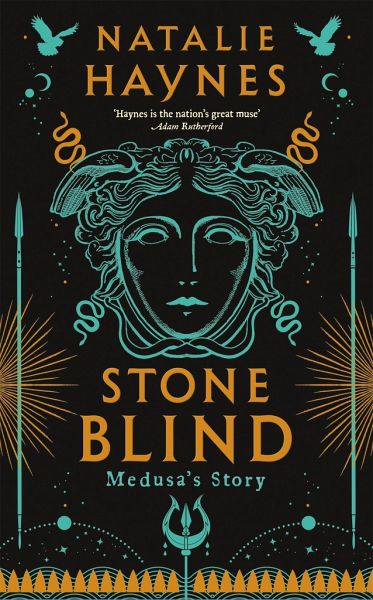
Auf dem Cover dieses Buches sehen wir zentral den Kopf einer Frau, um den sich die ersten Schlangen schlängeln. Es wirkt hochwertig, durch seine goldene Schrift und die türkisblauen Illustrationen auf schwarzem Grund.
Bei diesem Roman handelt es sich um eine …
Mehr
Erlebbarer Mythos
Auf dem Cover dieses Buches sehen wir zentral den Kopf einer Frau, um den sich die ersten Schlangen schlängeln. Es wirkt hochwertig, durch seine goldene Schrift und die türkisblauen Illustrationen auf schwarzem Grund.
Bei diesem Roman handelt es sich um eine Nacherzählung des bekannten Mythos der Medusa. Trotz der an sich bekannten Geschichte schafft es Natalie Haynes auf ihre unnachahmliche Art diese Geschichte über die Macht der Liebe glaubhafter und erlebbarer zu gestalten als viele andere vor ihr.
Jeder, der es liebt, griechische Mythen zu lesen, wird hier nicht enttäuscht und kann sich auf eine tolle Geschichte freuen, die einen die verschiedensten Gefühle durchleben lässt. Sie brachte mich zum Weinen und zum Lachen. Man konnte das Buch kaum aus den Händen legen, da man so in die Geschichte gezogen wurde, dass man mit den Figuren litt und möglichst schnell weiterlesen wollte und am Ende bleibt die Frage, wer eigentlich das Monster ist.
Eine klare Kaufempfehlung!
Weniger
Antworten 0 von 0 finden diese Rezension hilfreich
Andere Kunden interessierten sich für