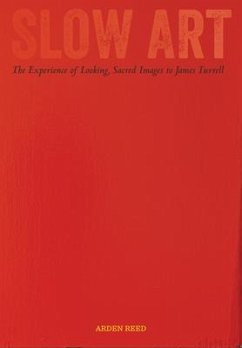
SLOW ART
PAINTING AND DRAWING AS A MEDITATIVE PROCESS
Versandkostenfrei!
Versandfertig in 6-10 Tagen
39,99 €
inkl. MwSt.

PAYBACK Punkte
20 °P sammeln!

Slow Art is the perfect antidote for ourimage-saturated age. Exploring the work of a rangeof contemporary artists who use a meditative process, Slow Art argues for a counterpoint to thedisposability of contemporary culture. The authorasks why we, as artists, make art and what it mightdo for all of us artists and viewers. Cancontemporary art reach beyond the need forentertainment and the shallow currency of fashionablesocial and political issues or are we faced withthe seemingly endless variety of what has becomestandardised as International Biennale art: consumed,digested and discarded as read...
Slow Art is the perfect antidote for our
image-saturated age. Exploring the work of a range
of contemporary artists who use a meditative
process, Slow Art argues for a counterpoint to the
disposability of contemporary culture. The author
asks why we, as artists, make art and what it might
do for all of us artists and viewers. Can
contemporary art reach beyond the need for
entertainment and the shallow currency of fashionable
social and political issues or are we faced with
the seemingly endless variety of what has become
standardised as International Biennale art: consumed,
digested and discarded as readily as last year s
wardrobe?
Slow Art argues for a new art based on the hand and
the body, unafraid of history and willing to talk
about what it means to be human. Drawing on object
relations theory and examining the evidence of the
work produced by a range of Australian and
International artists, the author looks
at the words of artists in notebooks, diaries and
interviews. Slow art also examines the work of
Vermeer, Sanchez Cotan and Francisco Zurbaran as
exemplars of a meditative mode of painting.
image-saturated age. Exploring the work of a range
of contemporary artists who use a meditative
process, Slow Art argues for a counterpoint to the
disposability of contemporary culture. The author
asks why we, as artists, make art and what it might
do for all of us artists and viewers. Can
contemporary art reach beyond the need for
entertainment and the shallow currency of fashionable
social and political issues or are we faced with
the seemingly endless variety of what has become
standardised as International Biennale art: consumed,
digested and discarded as readily as last year s
wardrobe?
Slow Art argues for a new art based on the hand and
the body, unafraid of history and willing to talk
about what it means to be human. Drawing on object
relations theory and examining the evidence of the
work produced by a range of Australian and
International artists, the author looks
at the words of artists in notebooks, diaries and
interviews. Slow art also examines the work of
Vermeer, Sanchez Cotan and Francisco Zurbaran as
exemplars of a meditative mode of painting.
Andere Kunden interessierten sich für