
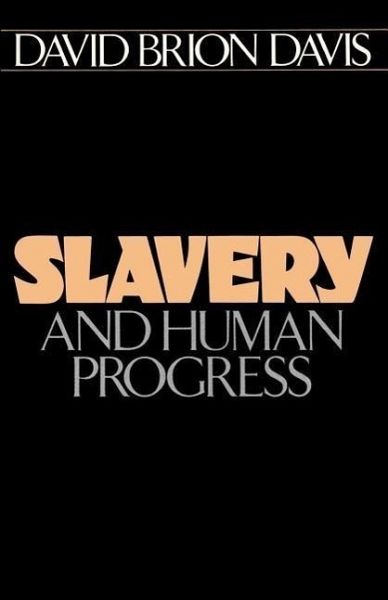
Slavery and Human Progress
Versandkostenfrei!
Versandfertig in 1-2 Wochen
36,99 €
inkl. MwSt.

PAYBACK Punkte
18 °P sammeln!

Pulitzer Prize-winner David Brion Davis here provides a penetrating survey of slavery and emancipation from ancient times to the twentieth century. His trenchant analysis puts the most recent international debates about freedom and human rights into much-needed perspective. Davis shows that slavery was once regarded as a form of human progress, playing a critical role in the expansion of the western world. It was not until the eighteenth and nineteenth centuries that views of slavery as a retrograde institution gained far-reaching acceptance. Davis illuminates this momentous historical shift from "progressive" enslavement to "progressive" emancipation, ranging over an array of important developments--from the slave trade of early Muslims and Jews to twentieth-century debates over slavery in the League of Nations and the United Nations. In probing the intricate connections among slavery, emancipation, and the idea of progress, Davis sheds new light on two crucial issues: the human capacity for dignifying acts of oppression and the problem of implementing social change.
Pulitzer Prize-winner David Brion Davis here provides a penetrating survey of slavery and emancipation throughout world history--from ancient times to the 20th century. He demonstrates that slavery, once regarded as a form of human progress, played a crucial part in the expansion of the Western world, and that not until the 18th and 19th centuries did views of slavery as a retrograde institution gain far-reaching acceptance. Illuminating this momentous historical shift from "progressive" slavery to "progressive" emancipation, Davis ranges over a wide array of important developments--from the transition from white to black slavery, to the impact of the Civil War and the Emancipation Proclamation, to 20th-century debates about slavery in the League of Nations and the U.N. He probes the intricate connections among slavery, emancipation, and the idea of progress, shedding new light on two crucial issues--the human capacity for dignifying acts of oppression and the problems of implementing social change--and placing the most recent international debate about freedom and human rights into much-needed perspective.
Andere Kunden interessierten sich für