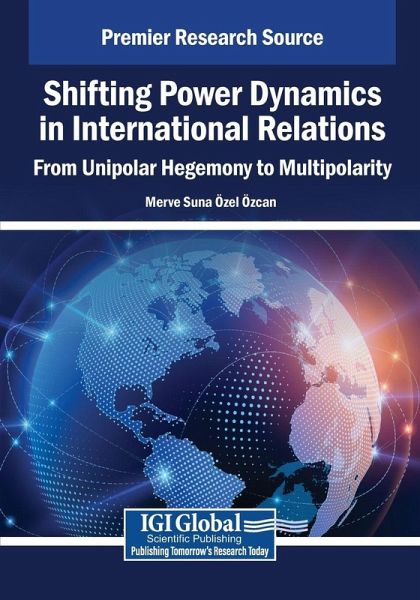
Shifting Power Dynamics in International Relations
From Unipolar Hegemony to Multipolarity
Herausgeber: Özel Özcan, Merve Suna
Versandkostenfrei!
Versandfertig in 1-2 Wochen
207,99 €
inkl. MwSt.

PAYBACK Punkte
104 °P sammeln!

The landscape of international relations transforms as shifting power dynamics redefine global influence and governance. Traditional powers, once dominated by Western nations, are challenged by emerging economies and regional alliances asserting their roles globally. This shift, impacted by economic growth, technological advancements, and evolving geopolitical interests, disrupts established norms and institutions. As a result, the balance of power is no longer unipolar or bipolar, but multipolar, creating both opportunities for cooperation and risks of conflict. Understanding these shifting d...
The landscape of international relations transforms as shifting power dynamics redefine global influence and governance. Traditional powers, once dominated by Western nations, are challenged by emerging economies and regional alliances asserting their roles globally. This shift, impacted by economic growth, technological advancements, and evolving geopolitical interests, disrupts established norms and institutions. As a result, the balance of power is no longer unipolar or bipolar, but multipolar, creating both opportunities for cooperation and risks of conflict. Understanding these shifting dynamics is essential for navigating the complexities of modern diplomacy and global policymaking. Shifting Power Dynamics in International Relations: From Unipolar Hegemony to Multipolarity examines hegemony within theoretical frameworks and the context of contemporary geopolitical developments. It explores the emerging steps toward multipolarity within the global system, shedding light on the transformations shaping international order. This book covers topics such as global business, regional conflicts, and foreign policy, and is a useful resource for government officials, policymakers, business owners, academicians, researchers, and political scientists.
Andere Kunden interessierten sich für