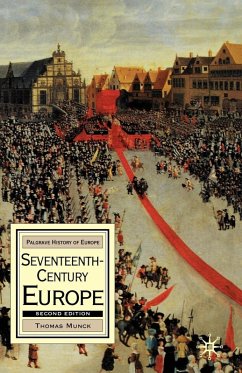
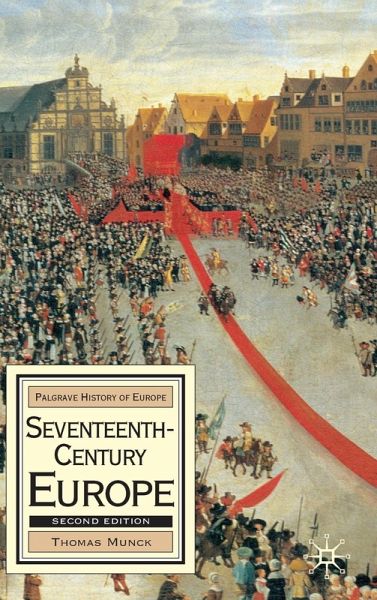
Seventeenth-Century Europe
State, Conflict and Social Order in Europe 1598-1700
Versandkostenfrei!
Versandfertig in 1-2 Wochen
159,99 €
inkl. MwSt.
Weitere Ausgaben:

PAYBACK Punkte
80 °P sammeln!

This thematically organised text provides a compelling introduction and guide to the key problems and issues of this highly controversial century. Offering a genuinely comparative history, Thomas Munck adeptly balances Eastern and Southern Europe, Scandinavia, and the Ottoman Empire against the better-known history of France, the British Isles and Spain.Seventeenth-Century Europe- gives full prominence to the political context of the period, arguing that the Thirty Years War is vital to understanding the social and political developments of the early modern period- provides detailed coverage o...
This thematically organised text provides a compelling introduction and guide to the key problems and issues of this highly controversial century. Offering a genuinely comparative history, Thomas Munck adeptly balances Eastern and Southern Europe, Scandinavia, and the Ottoman Empire against the better-known history of France, the British Isles and Spain.
Seventeenth-Century Europe
- gives full prominence to the political context of the period, arguing that the Thirty Years War is vital to understanding the social and political developments of the early modern period
- provides detailed coverage of the debates surrounding the 'general crisis', absolutism and the growth of the state, and the implications these had for townspeople, the peasantry and the poor
- examines changes in economic orientation within Europe, as well as continuity and change in mental and cultural traditions at different social levels.
Now fully revised, this second edition of a well-established and approachable synthesis features important new material on the Ottomans, Christian-Moslem contacts and on the role of women. The text has also been thoroughly updated to take account of recent research.
Seventeenth-Century Europe
- gives full prominence to the political context of the period, arguing that the Thirty Years War is vital to understanding the social and political developments of the early modern period
- provides detailed coverage of the debates surrounding the 'general crisis', absolutism and the growth of the state, and the implications these had for townspeople, the peasantry and the poor
- examines changes in economic orientation within Europe, as well as continuity and change in mental and cultural traditions at different social levels.
Now fully revised, this second edition of a well-established and approachable synthesis features important new material on the Ottomans, Christian-Moslem contacts and on the role of women. The text has also been thoroughly updated to take account of recent research.
Andere Kunden interessierten sich für