Sensibility
Versandkostenfrei!
Versandfertig in 6-10 Tagen
23,99 €
inkl. MwSt.

PAYBACK Punkte
12 °P sammeln!

Please note that the content of this book primarily consists of articles available from Wikipedia or other free sources online. Sensibility refers to an acute perception of or responsiveness toward something, such as the emotions of another. This concept emerged in eighteenth-century Britain, and was closely associated with studies of sense perception as the means through which knowledge is gathered. It also became associated with sentimental moral philosophy. One of the first of such texts would be John Locke''s Essay Concerning Human Understanding (1690), where he says, "I conceive that Idea...
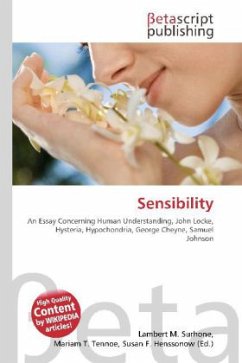
Please note that the content of this book primarily consists of articles available from Wikipedia or other free sources online. Sensibility refers to an acute perception of or responsiveness toward something, such as the emotions of another. This concept emerged in eighteenth-century Britain, and was closely associated with studies of sense perception as the means through which knowledge is gathered. It also became associated with sentimental moral philosophy. One of the first of such texts would be John Locke''s Essay Concerning Human Understanding (1690), where he says, "I conceive that Ideas in the Understanding, are coeval with Sensation; which is such an Impression or Motion, made in some part of the Body, as makes it be taken notice of in the Understanding." George Cheyne and other medical writers wrote of "The English Malady," also called "hysteria" in women or "hypochondria" in men, a condition with symptoms that closely resemble the modern diagnosis of clinical depression
Andere Kunden interessierten sich für