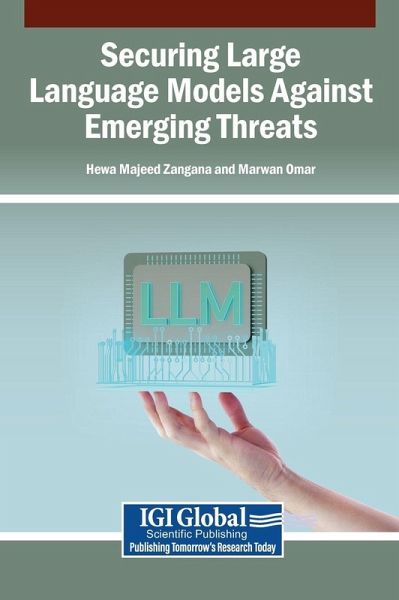
Securing Large Language Models Against Emerging Threats
Versandkostenfrei!
Versandfertig in 1-2 Wochen
211,99 €
inkl. MwSt.

PAYBACK Punkte
106 °P sammeln!

As large language models (LLMs) become integrated into critical applications, their security emerges as a pressing concern. While these models offer capabilities in understanding and generating language, they also present new vulnerabilities that malicious actors are learning to exploit. Emerging threats challenge the integrity, confidentiality, and availability of LLM-based systems. Securing these models requires a comprehensive approach that anticipates emerging risks, blending technical safeguards with responsible deployment practices. As the adoption of LLMs increases, strengthening them a...
As large language models (LLMs) become integrated into critical applications, their security emerges as a pressing concern. While these models offer capabilities in understanding and generating language, they also present new vulnerabilities that malicious actors are learning to exploit. Emerging threats challenge the integrity, confidentiality, and availability of LLM-based systems. Securing these models requires a comprehensive approach that anticipates emerging risks, blending technical safeguards with responsible deployment practices. As the adoption of LLMs increases, strengthening them against new threats becomes critical. Securing Large Language Models Against Emerging Threats explores the field of LLM security, focusing on the challenges, threats, and solutions surrounding the deployment and use of generative AI systems. It examines defense mechanisms, auditing techniques, red teaming practices, regulatory implications, and best practices for securing LLMs in real-world environments. This book covers topics such as cybercrime, smart technology, and fraud detection, and is a useful resource for security professionals, computer engineers, academicians, researchers, and scientists.
Andere Kunden interessierten sich für