Schist
Versandkostenfrei!
Versandfertig in 6-10 Tagen
26,99 €
inkl. MwSt.

PAYBACK Punkte
13 °P sammeln!

High Quality Content by WIKIPEDIA articles! High Quality Content by WIKIPEDIA articles! The schists form a group of medium-grade metamorphic rocks, chiefly notable for the preponderance of lamellar minerals such as micas, chlorite, talc, hornblende, graphite, and others. Quartz often occurs in drawn-out grains to such an extent that a particular form called quartz schist is produced. By definition, schist contains more than 50% platy and elongated minerals, often finely interleaved with quartz and feldspar. Schist is often garnetiferous. The individual mineral grains in schist, drawn out into ...
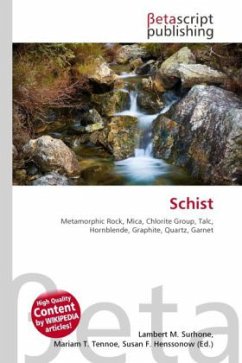
High Quality Content by WIKIPEDIA articles! High Quality Content by WIKIPEDIA articles! The schists form a group of medium-grade metamorphic rocks, chiefly notable for the preponderance of lamellar minerals such as micas, chlorite, talc, hornblende, graphite, and others. Quartz often occurs in drawn-out grains to such an extent that a particular form called quartz schist is produced. By definition, schist contains more than 50% platy and elongated minerals, often finely interleaved with quartz and feldspar. Schist is often garnetiferous. The individual mineral grains in schist, drawn out into flaky scales by heat and pressure, can be seen by the naked eye. Schist is characteristically foliated, meaning the individual mineral grains split off easily into flakes or slabs. The word schist is derived from the Greek word meaning "to split", which is a reference to the ease with which schists can be split along the plane in which the platy minerals lie.
Andere Kunden interessierten sich für