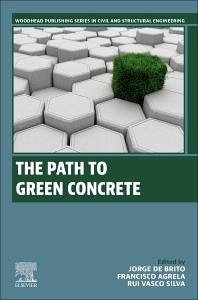
Residual properties of concrete subjected to high temperatures
Influence of high temperatures on the residual mechanical properties and durability of concrete
Versandkostenfrei!
Versandfertig in 6-10 Tagen
45,99 €
inkl. MwSt.

PAYBACK Punkte
23 °P sammeln!

The structural elements used in construction must be designed to meet the requirements of mechanical performance, durability and fire resistance. The main attributes of high-strength concrete (HSC) are its greater mechanical strength and durability, which are fundamental to the performance of a building. However, given its low porosity, HRC has lower fire resistance when compared to normal strength concrete (NRC), i.e. it is more prone to rupture, usually explosively, exposing the structure's reinforcement. Therefore, the aim of this study is to investigate the influence of high temperatures o...
The structural elements used in construction must be designed to meet the requirements of mechanical performance, durability and fire resistance. The main attributes of high-strength concrete (HSC) are its greater mechanical strength and durability, which are fundamental to the performance of a building. However, given its low porosity, HRC has lower fire resistance when compared to normal strength concrete (NRC), i.e. it is more prone to rupture, usually explosively, exposing the structure's reinforcement. Therefore, the aim of this study is to investigate the influence of high temperatures on the residual mechanical properties and durability of high-strength concrete with and without the addition of polypropylene fibers, as well as to analyze the possible occurrence of spalling. To this end, tests were carried out on cylindrical specimens in ovens heated to increasing temperatures, ranging from 100 °C to 800 °C at a constant heating rate of 1 °C/min, remaining at the pre-established temperature for 60 minutes and then being subjected to a constant cooling rate of 1 °C/min.
Andere Kunden interessierten sich für