"Precision Attachments in Prosthodontics: Concepts and Practice"
Integrating Function, Esthetics, and Biomechanics for Optimal Restorations
Versandkostenfrei!
Versandfertig in 6-10 Tagen
60,99 €
inkl. MwSt.

PAYBACK Punkte
30 °P sammeln!

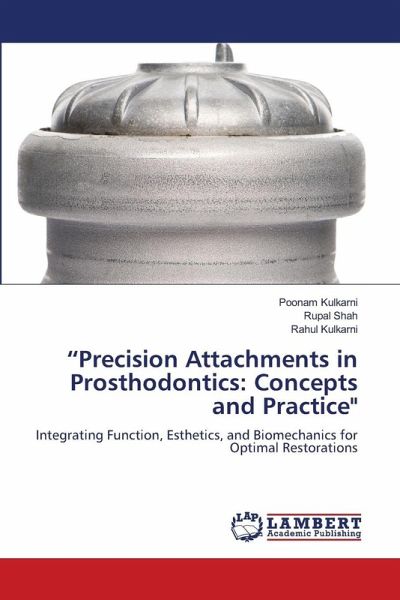
The success of a prosthesis depends on careful treatment planning and attention to the prosthodontic problems; the mechanical ingenuity of the attachment is important, but must take second place.A retainer of attachments used in fixed and removable partial denture construction consisting of a metal receptacle and a closely fitting part, the former is usually contained within the normal or expanded contours of the crown of the abutment tooth, and the latter is attached to a pontic or to the denture frame work.Precision attachments present a challenge in the technical skill. A thorough understan...
The success of a prosthesis depends on careful treatment planning and attention to the prosthodontic problems; the mechanical ingenuity of the attachment is important, but must take second place.A retainer of attachments used in fixed and removable partial denture construction consisting of a metal receptacle and a closely fitting part, the former is usually contained within the normal or expanded contours of the crown of the abutment tooth, and the latter is attached to a pontic or to the denture frame work.Precision attachments present a challenge in the technical skill. A thorough understanding of the biomechanics of maxillomandibular function, different attachments and knowledge of material science is essential in treating a case of precision attachment.Unfortunately, most often precision attachments are chosen from descriptions in manufacturer's catalogues which leads to failure of precision attachment cases.Precision attachments serve the function of retention, stress distribution and aesthetics successfully provided the case is planned based on sound biological and technical grounds and proper care is rendered by the dentist and the patient during the maintenance phase.
Andere Kunden interessierten sich für