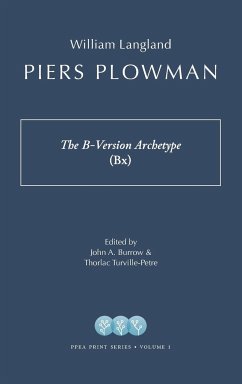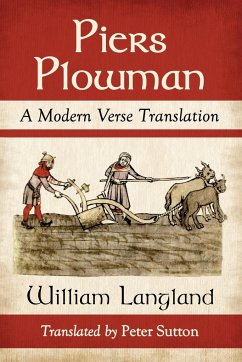
Piers Plowman
Exploring the Allegorical Depths of Medieval Society in "Piers Plowman"
Versandkostenfrei!
Versandfertig in 1-2 Wochen
22,00 €
inkl. MwSt.
Weitere Ausgaben:

PAYBACK Punkte
0 °P sammeln!

"Piers Plowman," written by William Langland between 1370 and 1380, is a seminal work of Middle English literature that delves into the social and spiritual fabric of medieval society through allegory and dream progression. The narrative follows the protagonist, Will, as he embarks on a quest for truth and salvation, guided by the enigmatic figure of Piers the Plowman. The poem is structured as a series of dream passages, each exploring different aspects of Christian life, morality, and the human condition. Langland employs a rich tapestry of allegorical characters and vivid imagery to critiqu...
"Piers Plowman," written by William Langland between 1370 and 1380, is a seminal work of Middle English literature that delves into the social and spiritual fabric of medieval society through allegory and dream progression. The narrative follows the protagonist, Will, as he embarks on a quest for truth and salvation, guided by the enigmatic figure of Piers the Plowman. The poem is structured as a series of dream passages, each exploring different aspects of Christian life, morality, and the human condition. Langland employs a rich tapestry of allegorical characters and vivid imagery to critique the corruption and moral decay within the Church and society at large. The work is notable for its use of the alliterative verse form, a hallmark of Middle English poetry, which enhances its rhythmic and mnemonic qualities. "Piers Plowman" is divided into sections called passus, each representing a step in Will's spiritual journey. Through these passus, Langland addresses themes such as the nature of sin, the importance of penance, and the pursuit of a virtuous life. The poem's enduring relevance lies in its profound exploration of the tension between worldly concerns and spiritual aspirations, making it a cornerstone of medieval literature and a precursor to later social and religious reform movements.
Andere Kunden interessierten sich für