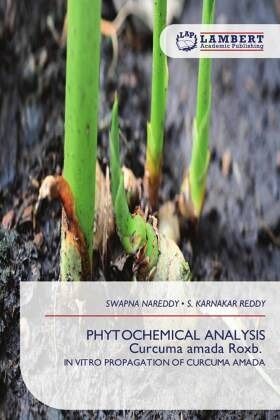
PHYTOCHEMICAL ANALYSIS Curcuma amada Roxb.
IN VITRO PROPAGATION OF CURCUMA AMADA
Versandkostenfrei!
Versandfertig in 6-10 Tagen
40,99 €
inkl. MwSt.

PAYBACK Punkte
20 °P sammeln!

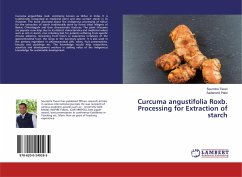
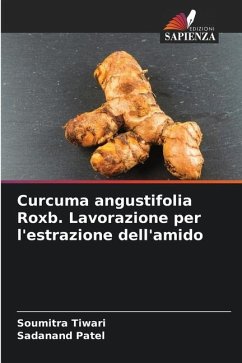
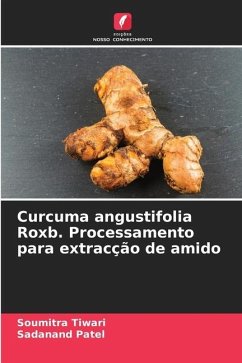
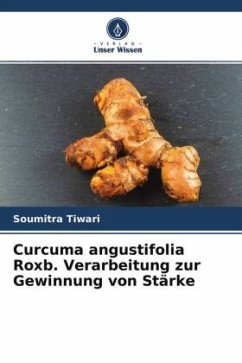
Mango ginger is the common name for Curcuma amada Roxb. It is a perennial, rhizomatous, aromatic herb in the Zingiberaceae family. This family contains 70-80 rhizomatous annual or perennial herbs species (Kaliyadasa and Samarasinghe, 2019). The genus originated in the Indo-Malayan region and is now found throughout Asia's tropics, as well as in Africa and Australia (Sasikumar, 2005). It is a functionally sterile monocotyledonous triploid (2n = 3 = 63) plant. Rhizomes are the only source of planting material in this crop because no sexually derived seeds are produced. The pseudo stem is tall an...
Mango ginger is the common name for Curcuma amada Roxb. It is a perennial, rhizomatous, aromatic herb in the Zingiberaceae family. This family contains 70-80 rhizomatous annual or perennial herbs species (Kaliyadasa and Samarasinghe, 2019). The genus originated in the Indo-Malayan region and is now found throughout Asia's tropics, as well as in Africa and Australia (Sasikumar, 2005). It is a functionally sterile monocotyledonous triploid (2n = 3 = 63) plant. Rhizomes are the only source of planting material in this crop because no sexually derived seeds are produced. The pseudo stem is tall and robust, with oblonga-elliptical leaves that are narrowed at the base with long, oblong, lanceolate, radical, sheathed, petiolate and tufted leaves. Each plant has 5 to 6 leaf pairs. Plant height can reach 1 m, with 8-10 leaves, an apical spike(length ranges from 10 to 18 cm) of pale-yellow flowers and starting root tubers produced at the end of fibrous roots. The antioxidant activity of anaqueous methanol extract of C. amada leaves and rhizomes was determined using the -carotene bleaching method (Sutar et al. 2020). Leaf extract outperformed rhizome extract in terms of activity.
Andere Kunden interessierten sich für