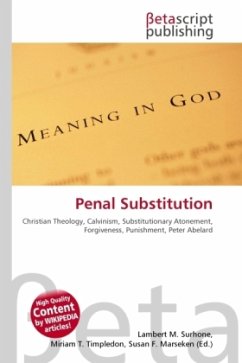
Penal Substitution
Versandkostenfrei!
Versandfertig in 6-10 Tagen
30,99 €
inkl. MwSt.

PAYBACK Punkte
15 °P sammeln!

High Quality Content by WIKIPEDIA articles! Penal substitution is a theory of the atonement within Christian theology, especially associated with the Reformed tradition. It argues that Christ, by his own sacrificial choice, was punished (penalised) in the place of sinners (substitution), thus satisfying the demands of justice so God can justly forgive the sins. It is thus a specific understanding of substitutionary atonement, where the substitutionary nature of Jesus' death is understood in the sense of a substitutionary punishment. It has traditionally been compared with the so-called classic...
High Quality Content by WIKIPEDIA articles! Penal substitution is a theory of the atonement within Christian theology, especially associated with the Reformed tradition. It argues that Christ, by his own sacrificial choice, was punished (penalised) in the place of sinners (substitution), thus satisfying the demands of justice so God can justly forgive the sins. It is thus a specific understanding of substitutionary atonement, where the substitutionary nature of Jesus' death is understood in the sense of a substitutionary punishment. It has traditionally been compared with the so-called classic theory, that Christ's death represents the cosmic defeat of the devil to whom a ransom had to be paid, a view popularised by Gustaf Aulén and secondly with the notion that the cross had its effect on human beings, by setting forth a supreme example of godliness or by blazing a trail which we must follow or by involving mankind in his redemptive obedience, the so-called subjective or exemplary theory associated with Peter Abelard and Hastings Rashdall.
Andere Kunden interessierten sich für