Participatory Modelling and Simulation to Improve AI-based Public Social Services
Scientific Advice for Policy and Practice
Herausgegeben: Ahrweiler, Petra; Gilbert, Nigel
Versandkostenfrei!
Erscheint vorauss. Mai 2026
31,99 €
inkl. MwSt.

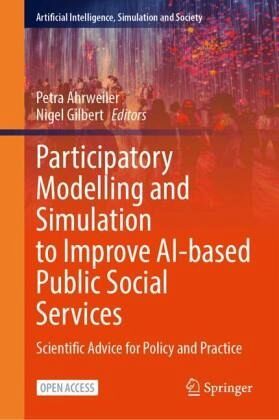
This open access volume showcases a series of models - particularly agent-based simulations - that explore pressing issues on national policy agendas, engaging with frontier questions around artificial intelligence (AI), welfare-related social assessment, and value diversity. These themes have profound implications for policy, cultural and societal life. The volume underscores the role of policy modelling in addressing how AI can be made context-specific, adaptive, and responsive within the public sector. Drawing on case studies from nine countries with differing value frameworks, the models e...
This open access volume showcases a series of models - particularly agent-based simulations - that explore pressing issues on national policy agendas, engaging with frontier questions around artificial intelligence (AI), welfare-related social assessment, and value diversity. These themes have profound implications for policy, cultural and societal life. The volume underscores the role of policy modelling in addressing how AI can be made context-specific, adaptive, and responsive within the public sector. Drawing on case studies from nine countries with differing value frameworks, the models examine welfare service provision choices and assess the demands, limitations, and effects of using AI to augment or replace traditional practices. The analyses reflect the pluralism of societal norms and values, while also considering the political, economic, and social pressures that shape them. The volume advocates for a participatory methodology and socio-technical infrastructure thatcan enable the development of more responsible, value-sensitive, and context-aware AI, and policies to implement it. By situating AI research, innovation and policy in close collaboration with society, it offers a fresh perspective for industry and innovation leaders. Ultimately, it presents a model for how participatory design and responsible technology production can better meet societal needs.
Andere Kunden interessierten sich für