



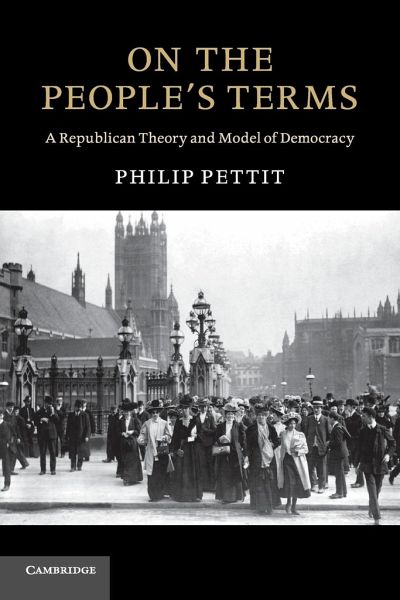
On the People's Terms
Versandkostenfrei!
Versandfertig in 1-2 Wochen
32,99 €
inkl. MwSt.
Weitere Ausgaben:

PAYBACK Punkte
16 °P sammeln!

Drawing on the work of historians like Quentin Skinner, neo-republican theory offers a new perspective on the theory of justice and democracy. This is the first extended statement of a republican theory of democracy. It gives a fresh account of the rationale of democracy and the institutions that democracy requires. According to republican theory, we are free persons to the extent that we are protected and secured in the same fundamental choices, on the same public basis, as one another. But there is no public protection or security without a coercive state. Does this mean that any freedom we ...
Drawing on the work of historians like Quentin Skinner, neo-republican theory offers a new perspective on the theory of justice and democracy. This is the first extended statement of a republican theory of democracy. It gives a fresh account of the rationale of democracy and the institutions that democracy requires. According to republican theory, we are free persons to the extent that we are protected and secured in the same fundamental choices, on the same public basis, as one another. But there is no public protection or security without a coercive state. Does this mean that any freedom we enjoy is a superficial good that presupposes a deeper, political form of subjection? Philip Pettit addresses this crucial question in On the People's Terms. He argues that state coercion will not involve individual subjection or domination insofar as we enjoy an equally shared form of control over those in power. This claim may seem utopian but it is supported by a realistic model of the institutions that might establish such democratic control. Beginning with a fresh articulation of republican ideas, Pettit develops a highly original account of the rationale of democracy, breathing new life into democratic theory.