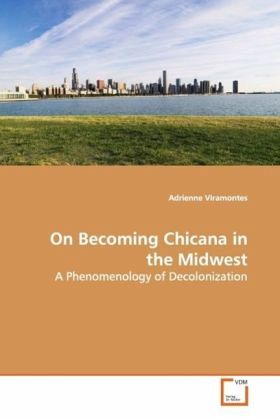
On Becoming Chicana in the Midwest
A Phenomenology of Decolonization
Versandkostenfrei!
Versandfertig in 6-10 Tagen
39,99 €
inkl. MwSt.

PAYBACK Punkte
20 °P sammeln!

This study is a phenomenological exploration anddescription of Mexican American identity. I focus on the conditionsthat made possible my muted ethnic identity, in which althoughI was a third generation Mexican American, who was predominantlyraised by first generation immigrants, I came to understand myself aswhite. I also focus on the process of decolonization that isparticular to my experience in Northwest Indiana, a location to whichthousands of Mexicans and many other immigrants migrated to workin the steel industry in the 1920s. By examining my own identityconstitution through the intersec...
This study is a phenomenological exploration and
description of
Mexican American identity. I focus on the conditions
that made
possible my muted ethnic identity, in which although
I was a third
generation Mexican American, who was predominantly
raised by first
generation immigrants, I came to understand myself as
white. I also
focus on the process of decolonization that is
particular to my
experience in Northwest Indiana, a location to which
thousands of
Mexicans and many other immigrants migrated to work
in the steel
industry in the 1920s. By examining my own identity
constitution
through the intersection of race, class, gender, and
industry in
Northwest Indiana, I argue that those intersections
in that Midwestern
locale shaped an experience that is related to, but
significantly
different from, the far more thoroughly researched
comparable
experience in the Southwest. and one that shaped my
identity as an
industrial, insurgent Chicana.
description of
Mexican American identity. I focus on the conditions
that made
possible my muted ethnic identity, in which although
I was a third
generation Mexican American, who was predominantly
raised by first
generation immigrants, I came to understand myself as
white. I also
focus on the process of decolonization that is
particular to my
experience in Northwest Indiana, a location to which
thousands of
Mexicans and many other immigrants migrated to work
in the steel
industry in the 1920s. By examining my own identity
constitution
through the intersection of race, class, gender, and
industry in
Northwest Indiana, I argue that those intersections
in that Midwestern
locale shaped an experience that is related to, but
significantly
different from, the far more thoroughly researched
comparable
experience in the Southwest. and one that shaped my
identity as an
industrial, insurgent Chicana.
Andere Kunden interessierten sich für