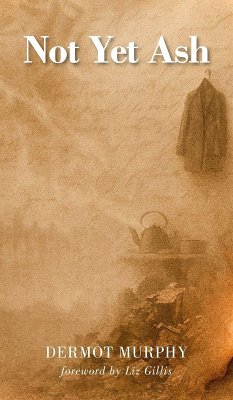
Not Yet Ash

PAYBACK Punkte
9 °P sammeln!

Not Yet Ash reimagines the private aftermath of the 1916 Easter Rising through the voices of those left behind, the wives, mothers, sisters, and sons of the executed leaders. These are not the voices heard in commemorations or schoolbook versions of history, but the quieter responses that unfold in kitchens, bedrooms, doorways, and long years of silence: the lives that continued, and the grief that never quite ended. Some voices look forward as well as back, tracing the legacy of 1916 into the Ireland of today, an Ireland where memory and myth still meet in murals, street names, political rhet...
Not Yet Ash reimagines the private aftermath of the 1916 Easter Rising through the voices of those left behind, the wives, mothers, sisters, and sons of the executed leaders. These are not the voices heard in commemorations or schoolbook versions of history, but the quieter responses that unfold in kitchens, bedrooms, doorways, and long years of silence: the lives that continued, and the grief that never quite ended. Some voices look forward as well as back, tracing the legacy of 1916 into the Ireland of today, an Ireland where memory and myth still meet in murals, street names, political rhetoric, and quiet acts of endurance. A work of empathy rather than reconstruction, Not Yet Ash restores emotional depth to a moment often engraved only in stone. It honours the human cost of history not by retelling it, but by listening for the voices that might have been lost to silence. "Dermot Murphy brings us on an emotional journey through the imagined words of those who were left behind. The pain, pride, and humanity in these poems are heartbreaking. He has put the human voice back into the narrative of 1916 with rare sensitivity" Liz Gillis, Historian "These are moving poems. It's wonderful to see the richness of the archive for the revolutionary period explored in poetic form and entirely appropriate, given the importance of culture and art to this generation." Fearghal McGarry, Professor of Modern Irish History, Queen's University Belfast