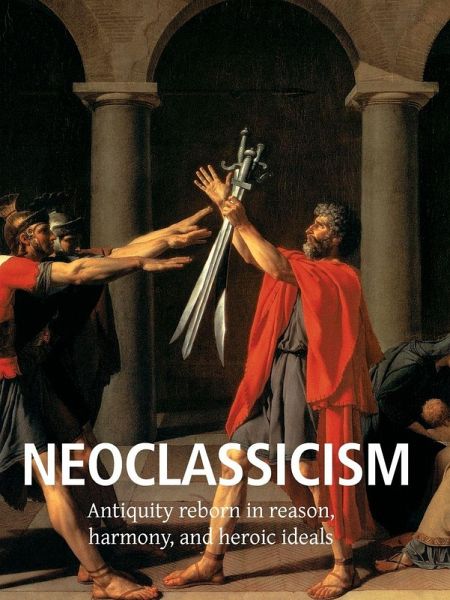
Neoclassicism
Antiquity reborn in reason, harmony, and heroic ideals
Versandkostenfrei!
Versandfertig in 1-2 Wochen
29,99 €
inkl. MwSt.

PAYBACK Punkte
15 °P sammeln!

In the arts, Neoclassicism is a historical tradition or aesthetic attitude based on the art of Greece and Rome in antiquity. The movement started around the 18th-century, age of Enlightenment, and continued into the early 19th-century The general credo associated with the aesthetic attitude of Classicism was that art had to be rational and therefore morally better. Neoclassicists also believed that art should be cerebral, not sensual and therefore characterised by clarity of form, sober colours and shallow space. It was a reaction against both the surviving Baroque and Rococo styles, and a des...
In the arts, Neoclassicism is a historical tradition or aesthetic attitude based on the art of Greece and Rome in antiquity. The movement started around the 18th-century, age of Enlightenment, and continued into the early 19th-century The general credo associated with the aesthetic attitude of Classicism was that art had to be rational and therefore morally better. Neoclassicists also believed that art should be cerebral, not sensual and therefore characterised by clarity of form, sober colours and shallow space. It was a reaction against both the surviving Baroque and Rococo styles, and a desire to return to the perceived "purity" of the arts of Rome. The important artists of the movement include the sculptors Antonio Canova, Jean-Antoine Houdon and Bertel Thorvaldsen, and the painters J.A.D. Ingres, Jacques-Louis David and Anton Raphael Mengs.
Andere Kunden interessierten sich für