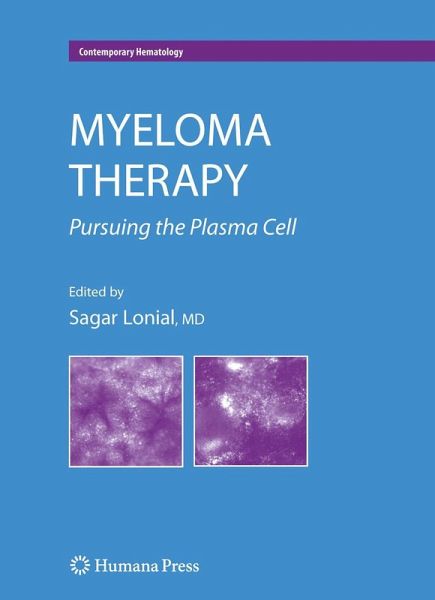
Myeloma Therapy
Pursuing the Plasma Cell
Herausgegeben: Lonial, Sagar
Versandkostenfrei!
Versandfertig in 6-10 Tagen
152,99 €
inkl. MwSt.

PAYBACK Punkte
76 °P sammeln!

Therapeutic options for patients with myeloma have radically changed over the past ten years. Beginning with the advances in therapy resulting from the use of high dose therapy and autologous bone marrow or stem cell transplant, we have more than doubled the median survival for patients as a whole, and have now a wealth of different biology based treatment approaches for our patients in all disease stages. The purpose of this book is to update the various treatment options for patients with myeloma, as well as to focus on the emerging and speculative aspects of myeloma therapy. This will require review of basic mechanisms of disease as well as further discussions on how these mechanisms can best be targeted. While there will be text covering most areas of myeloma therapy, the prime focus of the book will be the novel agents currently in testing as well as potential future novel targets and agents.
Therapeutic options for patients with myeloma have dramatically changed over the past 10 years. Beginning with the advances in therapy resulting from the use of high-dose therapy and autologous bone marrow or stem cell tra- plant, we have more than doubled the median survival for patients as a whole, and have now have a wealth of different biology -based treatment approaches for our patients in all disease stages. This book represents state-of-the-art information from many of the leaders in the plasma cell disorders world. Sections focusing on disease pathogenesis and biology, chemotherapy-based approaches, immune -based therapies, currently approved novel agents, developing targets, supportive care, and other plasma cell disorders provides a comprehensive collection and an excellent resource in this time of rapid change in clinical and preclinical disease knowledge. It is important to realize that these changes did not occur in a vacuum. Partnerships between academic institutions, the pharmaceutical industry, patient advocacy groups, the National Cancer Institute, community onco- gists, and ultimately our patients worked closely together to realize these advances, and to effect the radical changes in therapy we have witnessed over the past few years. This book would not have been possible without contri- tions from each of the gifted scientists and clinicians who worked tirelessly to prepare their individual chapters all the while maintaining commitment to the scientific and clinical mission of advancing care.
Andere Kunden interessierten sich für