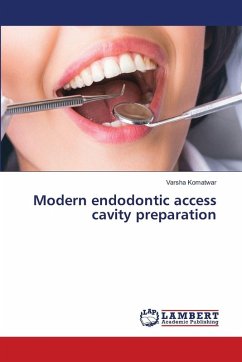
Modern endodontic access cavity preparation
Versandkostenfrei!
Versandfertig in 6-10 Tagen
40,99 €
inkl. MwSt.

PAYBACK Punkte
20 °P sammeln!

Minimally invasive access cavity preparations have been proposed in endodontics withthe aim of preserving the pericervical dentin. Because the pericervical dentin functions as a stress distributor, preserving it may potentially improve the resistance to fracture.This approach was proposed by Clark and Khademi based on the assumption that theremoval of dental hard tissues such as the pericervical dentin, the oblique ridges, and thinning the marginal ridges for clinical convenience can potentially increase the chances of tooth fracture. Although traditional access preparations have consistently ...
Minimally invasive access cavity preparations have been proposed in endodontics withthe aim of preserving the pericervical dentin. Because the pericervical dentin functions as a stress distributor, preserving it may potentially improve the resistance to fracture.This approach was proposed by Clark and Khademi based on the assumption that theremoval of dental hard tissues such as the pericervical dentin, the oblique ridges, and thinning the marginal ridges for clinical convenience can potentially increase the chances of tooth fracture. Although traditional access preparations have consistently achieved the required goals,concerns were raised on their effect on tooth survivability and resistance to fracture. On the other hand, minimally invasive access preparations in their attempt to preserve the tooth structure may potentially compromise one or more of the access preparation goals.Clinicians should strive to minimize the amount of tooth structure lost during access preparation.
Andere Kunden interessierten sich für