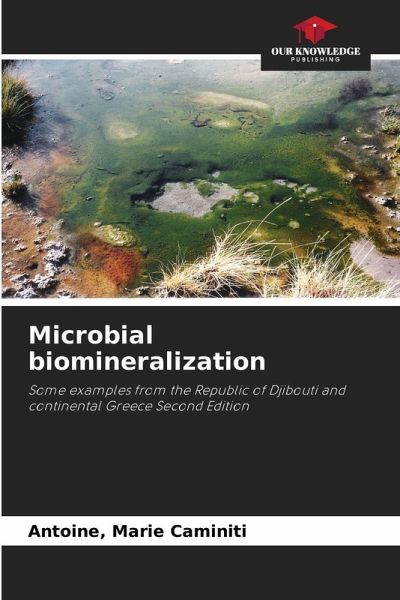
Microbial biomineralization
Some examples from the Republic of Djibouti and continental Greece Second Edition
Versandkostenfrei!
Versandfertig in 6-10 Tagen
29,99 €
inkl. MwSt.

PAYBACK Punkte
15 °P sammeln!

Every geologist wonders about the origin of a geological formation and the minerals that make it up and from which it is derived. In sedimentary formations, many examples of minerals and ores observed in the field and studied in the laboratory have a microbial or closely associated origin, and many geologists, microbiologists, biologists, geochemists and chemists currently agree that microbes can play a direct role in mineralization, but above all an important role in trapping and concentrating metals. Studies carried out on certain carbonate ooid horizons, sulfide-rich Upper Jurassic levels a...
Every geologist wonders about the origin of a geological formation and the minerals that make it up and from which it is derived. In sedimentary formations, many examples of minerals and ores observed in the field and studied in the laboratory have a microbial or closely associated origin, and many geologists, microbiologists, biologists, geochemists and chemists currently agree that microbes can play a direct role in mineralization, but above all an important role in trapping and concentrating metals. Studies carried out on certain carbonate ooid horizons, sulfide-rich Upper Jurassic levels at Ali Sabieh, Cretaceous-age iron pseudo-pisoliths and pseudo-ooids at Ali Sabieh, carbonate hydrothermal travertines at Lake Abhé and Lake Asal, and salt balls at Lake Asal, have shown mineralization resulting from microbial metabolisms. Between 1982 and 1985, sedimentological studies carried out on Middle Cretaceous bauxite and Tertiary ferro-phosphates from continental Greece demonstrateda close relationship between stromatolites, ooids and these minerals.
Andere Kunden interessierten sich für