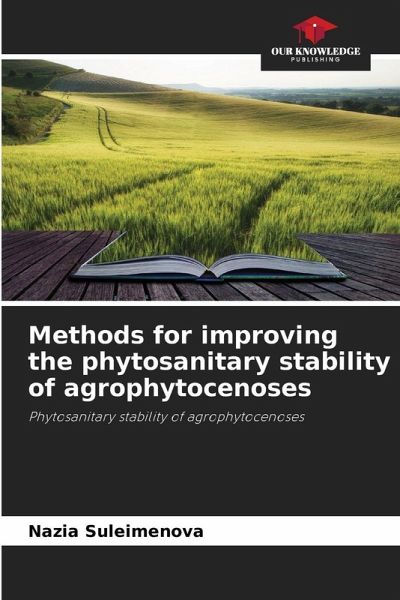
Methods for improving the phytosanitary stability of agrophytocenoses
Phytosanitary stability of agrophytocenoses
Versandkostenfrei!
Versandfertig in 6-10 Tagen
20,99 €
inkl. MwSt.

PAYBACK Punkte
10 °P sammeln!

This monograph outlines the theoretical foundations and practical methods for improving the phytosanitary stability of agrophytocenoses in adapted agriculture in southeastern Kazakhstan. It examines the characteristics of agrophytocenosis formation and provides agroecological criteria for the harmfulness of weeds. The competitive relationships between the components of agrophytocenosis are shown depending on agricultural methods of regulating weed abundance. A model for predicting crop weediness is presented. Methods for stabilizing the phytosanitary sustainability of agrophytocenoses and thei...
This monograph outlines the theoretical foundations and practical methods for improving the phytosanitary stability of agrophytocenoses in adapted agriculture in southeastern Kazakhstan. It examines the characteristics of agrophytocenosis formation and provides agroecological criteria for the harmfulness of weeds. The competitive relationships between the components of agrophytocenosis are shown depending on agricultural methods of regulating weed abundance. A model for predicting crop weediness is presented. Methods for stabilizing the phytosanitary sustainability of agrophytocenoses and their impact on the economic efficiency of cultivation and the yield of the leading agricultural crops in the region are given. The monograph is intended for a wide range of researchers, specialists in the agro-industrial complex, PhD students, master's students, and university students involved in issues related to improving the phytosanitary stability of agro-phytocenoses in agroecosystems.
Andere Kunden interessierten sich für